- Home
- U.S. Palms
- Florida Palms
- Common FL Palms
Common Palm Trees in florida - 14 You'll Actually See Everywhere
If you’re walking around Florida - whether it’s a neighborhood, a resort, or even a grocery store parking lot, you’ll start noticing something pretty quickly: the same palm trees show up again and again. At least they look the same to you.
We've created this primer to help you sort them out.
We didn't include every palm that can grow in Florida. Not rare collector varieties. Just the ones you’re most likely to actually see in everyday Florida life.
Feeling overwhelmed by palm tree problems or confusing information?
You’re not alone! At Mission: Palm Trees, we do the Authentic Research for you, by cross-checking botanical data, and then making palm tree info interesting, easy to read & more fun to know.
What Makes a Palm “Common” in Florida?
When we call a palm "common" in Florida, we're not specifically including the species which happen to grow here naturally.
We're talking about the palms that show up again and again. You'll see these in street medians, in shopping plaza parking lots, aside pool decks, and framing front yards from Pensacola to Key West.
A Florida palm tree earns "common" status in for a few practical reasons.
- These palms handle Florida's heat and humidity without concern. They dominate the landscape because they're able to easily shrug off the sun, the summer storms, and the sticky air.
- They're widely available. Almost any nursery in the state has these same species stocked, ready to plant. That easy access matters - homeowners and landscapers both often choose what's simple to find.
- They grow reliably with minimal fuss. These palms don't need constant attention and special soil additions. Plant them, give them basic upkeep, and they excel.
- Landscapers keep coming back to them. Commercial developments, HOA communities, and municipal projects all lean on the same handful of dependable species over & over again.
Considering all of that, you'd have more than a list of palms that just exist in Florida, you get the palms that actually define how the state looks.
They're the backdrop of Florida's daily life, so familiar that Floridians barely notice them anymore. That's exactly what makes them common.
Quick List | The Most Common Florida Palm Trees
If you’re looking for a complete breakdown of all types of palms in the state, that’s covered in our broader guide, covering many Kinds of Palm Trees in Florida.
But if you want to recognize the palms around you - or choose one that fits right in on your property - this is a starting point...
Cabbage Palm (Sabal palmetto)
Also just called a palmetto, this Florida native has become a go-to for HOAs that require native species in their planting plans.
- Florida's official state tree, it tolerates poor soil and temporary drought.
- Full round canopy at the top. Each frond is 4-6ft/1.2-1.8m long.
- Can grow up to 90ft/27m tall.
Where you’ll see it: Roadsides, parks, natural areas.
Why it’s popular: Native, tough, low maintenance.
Quick ID: Fan-shaped leaves and often a “roughish” light tan trunk.
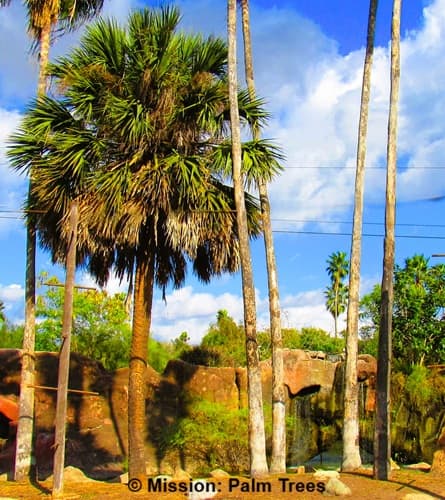 Cabbage palm in a zoo's landscape.
Queen Palm (Syagrus romanzoffiana)
The Queen is one of the most popular ornamental palms in the world. Because of its beauty. Most suited to zones 9b-11.
- Fast-growing up to 75ft/23m, feathery, and pretty much instantly recognizable.
- Its graceful, arching fronds top its gorgeous appearance.
- Pinnate (feather) fronds have various hues of green, even yellowish. The oldest, dead leaves eventually drop off on their own.
Where you’ll see it: Residential yards, older landscaping & new developments
Why it’s popular: Fast-growing, classic feather-palm look
Quick ID: Long, drooping fronds, with a container-like looking section at the trunk's top. Once you learn to recognize it, you always will!
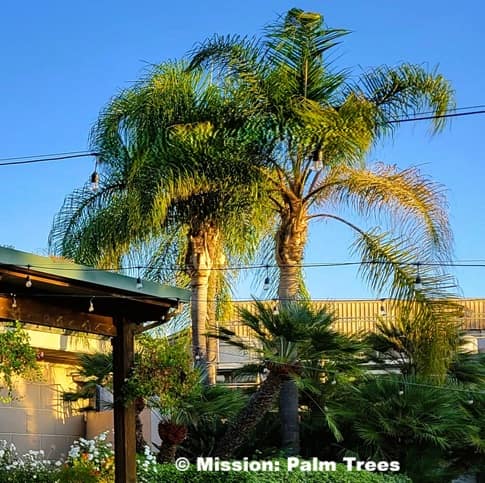 Queen Palms at a winery.
Areca Palm (Dypsis lutescens)
Also called the Butterfly Palm or Golden Cane Palm.
- This clustering palm is loved for its silvery-green crownshaft.
- Rises up to 40ft/12m fairly quickly, when given its high water needs.
Where you’ll see it: Privacy hedges, clustering in yards
Why it’s popular: Dense growth, tropical feel
Quick ID: Multiple dark green trunks with widely spaced light rings, growing in a clump. Feathery fronds usually arched.
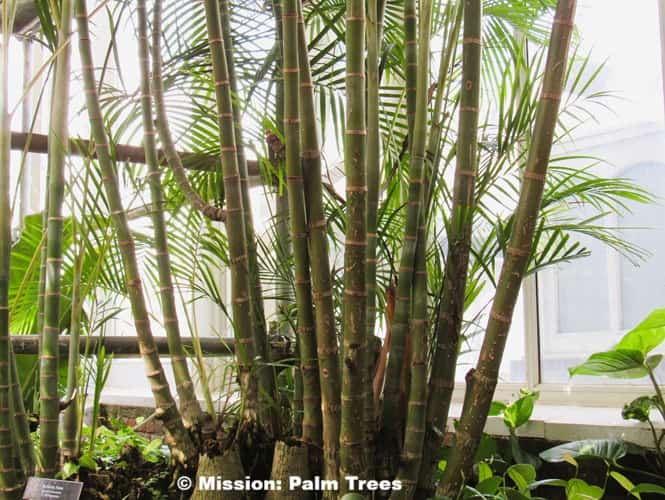 Its clustering form is quite visible here.
Christmas Palm (Adonidia merrillii)
The Christmas Palm really doesn't like northern December weather!
- Hardiness growing zone is 10a or higher - and that's final!
- It needs warm weather, and will die if exposed to freezing temps. Making it an ideal potted Indoor Palm.
- Easy maintenance: not too much watering & can do full sun or some shade.
Where you’ll see it: Smaller residential lots - as people love its compact size.
Why it’s popular: Has captivating looks around the December holidays when it has contrasting bright red fruit.
Quick ID tip: Pinnate fronds curve gracefully, forming an arc shape. Look for the light green crownshaft at the trunk's top.
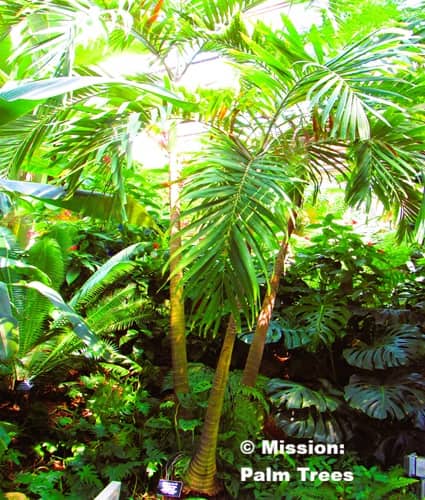 Christmas Palm growing in a botanical garden.
Coconut Palm (Cocos nucifera)
Yes, it's that true tropical icon! Generously lined up on beachfront home properties and resorts. You'll certainly know it as it's nearly always producing Coconut Fruits.
- There are three reasons the Coconut Palm is a favored Florida Palm tree in coastal areas.
- The have extraordinary salt tolerance
- They easily grow in sandy soils
- They grow fairly quickly
But only in South Florida. The Coconut Palm Grows Best in growing zones 10b-11. It does not tolerate a freeze.
It's very common at the beach palm because it does so well in sandy soil. But it's also along main avenues, in parks, and on private landscapes.
Yet it's considered an invasive species. You'd think it was among the palm trees in Florida that are native, but it's not. Plus it can be attacked by palm aphids & coconut mites. And it's predisposed to lethal bronzing as well as lethal yellowing - although some cultivars have resistance. Be wary of bud rot & ganoderma.
If you're thinking of planting one, check these locally specific typical rules for it to be okay.
- Put unused coconuts in yard waste.
- Don't plant it near canals, flowing streams, rivers or bays. Or aside a natural area.
- Don't allow coconuts to enter those waterways.
Where you’ll see it: South Florida, coastal areas
Why it’s popular: Iconic tropical look
Quick ID: Leaning trunk with coconuts often present.
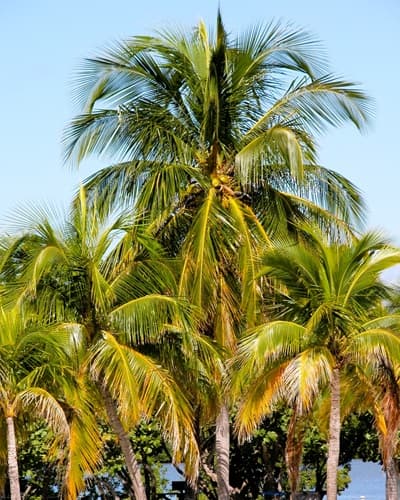 Coconut palms are ubiquitous in the tropics.
Sylvester Palm (Phoenix sylvestris)
Also called the Wild Date Palm or Toddy Palm.
- Recognized from its flattened diamond-shaped trunk texture.
- It's drought-tolerant, and cold hardy to 20oF/-6.7oC.
- A favorite for commercial and municipal plantings.
- One drawback is it's slightly vulnerable to leather yellowing.
Where you’ll see it: In many Florida landscapes.
Why it’s popular: Easily grows from seed, pretty quickly.
Quick ID tip: Full, thick crown has as many as 100 pinnate fronds.
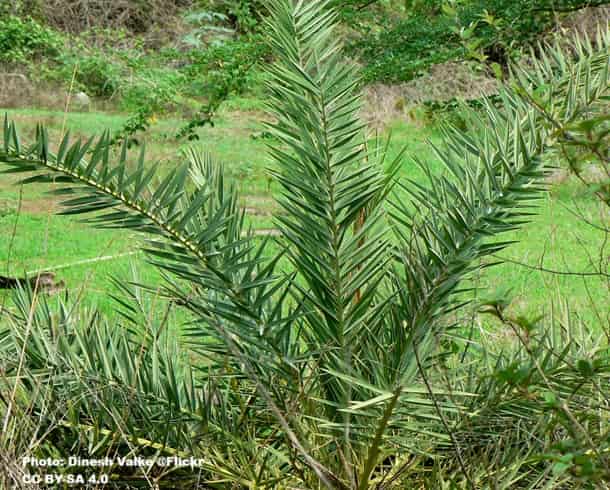 Young specimen in India, but grows in Florida, too.
Recent Article


-
Common Palm Trees in Florida
 See the 15 most common palm trees in Florida and learn how to identify each one as you spot them in neighborhoods, parks, and beaches.
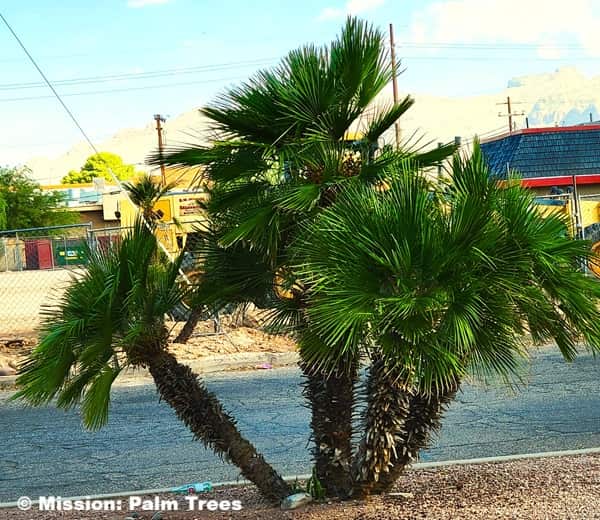
Pygmy Date Palm (Phoenix roebelenii)
Also called Miniature Date Palm, ideal in small gardens.
- One of the most popular small landscape palms in Florida
- Often grown in groups of 2-4 to create a lush look
- An ideal choice for tight garden spaces, as it maxes out at 6-1/2ft/2m.
Where you’ll see it: Entryways, small yards, decorative groupings
Why it’s popular: Compact size, easy to place
Quick ID: Short height with a fiber-textured trunk and slightly arching fronds, with leaflets that droop downward from the stem.
Mexican Fan Palm (Washingtonia robusta)
It's found in much dryer areas than Florida. Like the Famed Palms in Southern California, but does well in south Texas plus Tucson and Phoenix Arizona. And of course, because of its dramatic appearance, it's planted in Florida, too.
Old dead fronds may cling for awhile.
Where you’ll see it: Streets, medians, commercial areas
Why it’s popular: Fast-growing, to its sky-high height
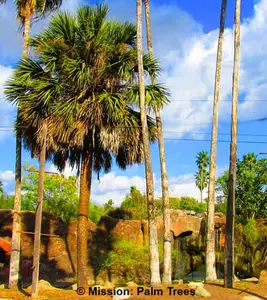
Quick ID: Very tall, with a skinny trunk with a crown of fan (palmate) leaves
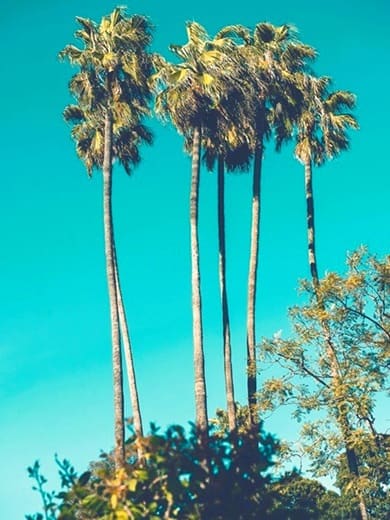 Stunning look because of the height on such a thin trunk.
Foxtail Palm (Wodyetia bifurcata)
A real stunner when Included in Your Landscape Plan, with its lush, fluffy, feathery pinnate fronds.
- Likes full sun and heat. No temps below 50oF/10oC.
- Moderately sized up to about 50ft/15m.
- Only medium watering, overdoing it can invite leaf spot.
Where you’ll see it: Newer developments, upscale landscaping
Why it’s popular: Clean, lovely symmetrical look
Quick ID: Full, bushy fronds that resemble a fox’s tail. Has a bluish green crownshaft.
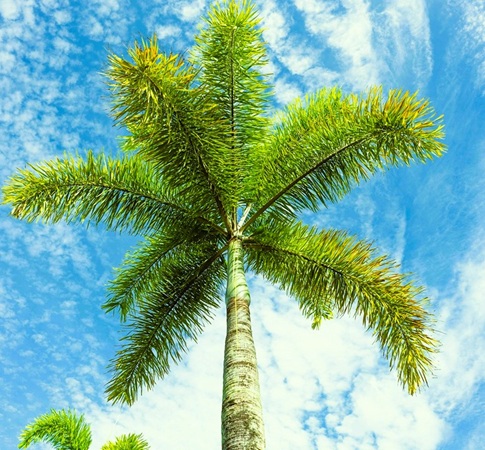 Foxtail palms are popular - but need temps to stay above freezing.
Royal Palm (Roystonea regia)
The southern tip of Florida is ideal for this Zone 9b+ pinnate.
- Very tall with a very light gray trunk that flares at the bottom
- Natively growing in wet, swampy areas so its water needs are high
- Feathery leaves with leaflets growing from the stem at different angles
Where you’ll see it: Boulevards, upscale areas, Miami
Why it’s popular: Smooth, elegant appearance exemplifying the tropics
Quick ID: Smooth gray trunk with a tall green crownshaft
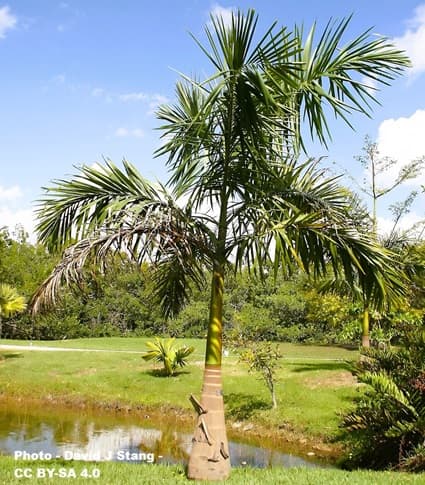 Small Royal specimen a variant called maisiana.
King Palm (Archontophoenix cunninghamiana)
Also called the Bangelow Palm, it's somewhat fast-growing.
- Its light gray trunk is topped with a green crownshaft.
- Its superb crown can reach 50ft/10m, with pinnate leaves that twist midway.
- Needs very good watering, appreciating a bit of mulch.
Where you’ll see it: In landscapes from homes to parks.
Why it’s popular: Grows fairly quickly, and is easily Grown From the Seed.
Quick ID tip: The flowering stalks droop just below the crownshaft. In season the colorful flowers may be lavendar, rose or violet.
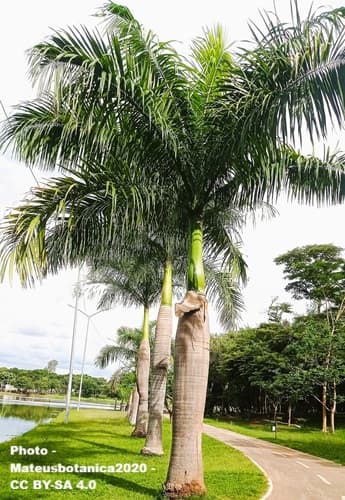 Three of them along a pathway in a botanical garden.
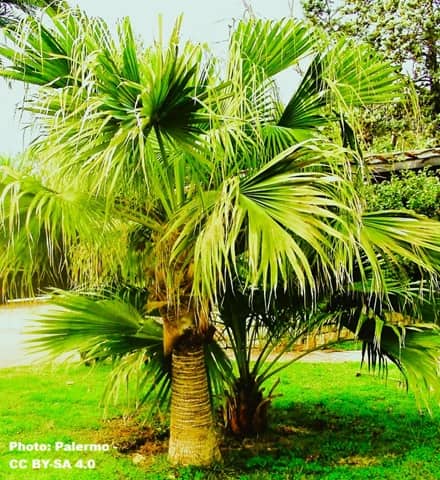
Chinese Fan Palm (Livistona chinensis)
A gorgeous look with its nearly found fan fronds. Typically found where temps don't go below15oF/-9.4oC.
- Averages 10ft/3m in height, with some drought tolerance.
- Flexible for sun or part shade.
- Very little prone to ganoderma fungi and lethal bronzing.
Where you’ll see it: Smaller yards or multiples in a park.
Why it’s popular: Its durable for a wider climate range, zones 8b-11, not overly thirsty.
Quick ID tip: Palmate fronds with segments that droop halfway in. Light reddish brown trunk with closely set rings or grooves.
Bismarck Palm
Bismarckia nobilis reaches about 60ft/18m.
- Its palmate fan-shaped fronds add to that substantial look. Ideal climate zone is 9b-11, but can be carefully flexed into 9a.
- Has a substantial appearance, with medium water requirements. Yet can tolerate temporary droughts.
- When established, its growth rate speeds up.
- Be wary of lethal bronzing.
Where you’ll see it: Upscale areas, parks and private landscapes.
Why it’s popular: People love its beauty and awesome hefty look.
Quick ID tip: Relatively short for its massive look with a full crown of fan fronds.
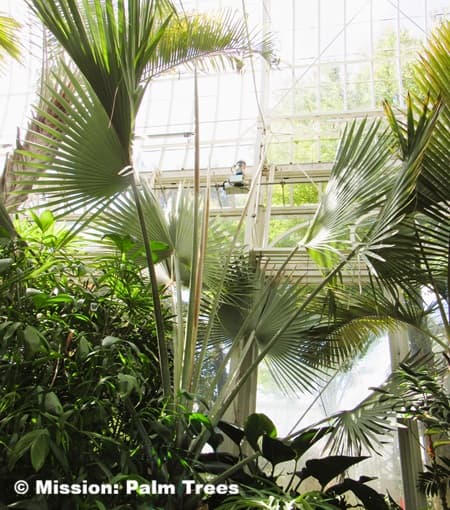 Bismarck Palm in Phipps Conservatory, Pittsburg Pennsylvania
Pindo Palm (Butia odorata)
Formerly its scientic name was Butia capitata, you Still Could See That Naming. It's also called the Jelly Palm.
- It can reach 35ft/10.5m tall at a medium clip.
- In Florida, it's best suited for USDA Climate Zones 9-11 (Find Your Zone Here).
- You'll find it growing well in full sun, but a little shade is doable.
Where you’ll see it: Home gardens and yards, wildlife areas and parks.
Why it’s popular: On the shorter side, good choice for small area placement. Edible fruit is used to make jelly.
Quick ID tip: After falling off the trunk, the feathery pinnate fronds leave some of the stem's base. Creating a unique trunk form.
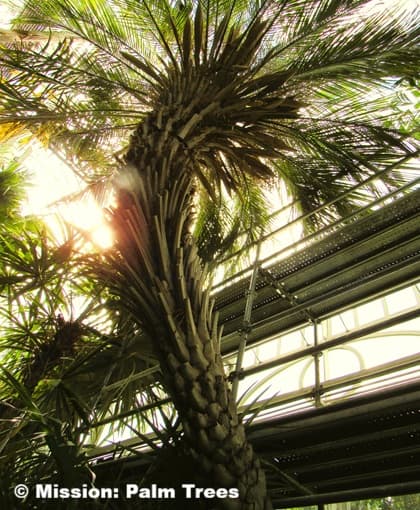 At its tallest. Note the leftover frond bases on the Jelly Palm trunk.
Native vs. Non-Native: What You’re Actually Seeing
Why These Palms Dominate Florida Landscapes
There’s a reason you keep seeing Florida's same common palms over and over: They grow quickly and predictably.
- They're suitable for the climate, handling heat, humidity, and storms reasonably well.
- They’re easy for nurseries to supply in large numbers at expected costs. They recommend some because of their quick growth speed.
- They give that aesthetic “Florida look” people expect when visiting the state.
In short - they work!
Want the Full Breakdown of All Florida Palms?
If you’re curious about all the palm tree types that grow in Florida, including less common and more specialized varieties - take a look at the full guide:

About the Authors: Karen McGowan is the creator of MissionPalmTrees.com, and The Palm Species Navigator, along with her husband Bill. Where they share easy to read palm tree expertise gained from years of finding and studying palms in varied climates. So readers will know palms, and can avoid costly palm planting mistakes. Learn more.
Don't Miss It: The Right Palm, The Right Place
Our free quick-reference guide is yours! So you can stop guessing which species will survive your local climate.
Along with that, the Palm Species Navigator for tips on species hardiness, seasonal care, and more. Click to enter your email & get your guide.
For More Landscape Interest
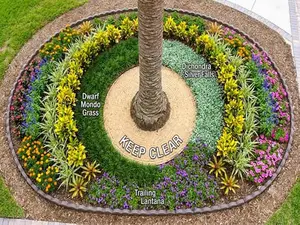
Landscaping Around a Palm Tree: Best Plant Ideas
Choose companion plants, edging, and mulch that make your palm tree stand out, with landscaping around a palm tree ideas that protects the trunk.
Where Do Palm Trees Grow? Maybe More Places Than You Thought!
Wondering where do palm trees grow? For sure it's the tropics & subtropics. They're more versatile than that, though. Even doable for temperate regions.
Landscaping With Palm Trees - Ideas & Top Tips!
Transform your yard when you discover our easy landscaping with palm trees ideas, perfect for any skill level. See simple designs that make a big impact.

We Love Arizona Where Palm Trees Grow & We Love Helping Others Appreciate Them Too!
Member of Local First Arizona - Supporting Local Businesses Wherever They Are!
Privacy Policy> | Terms/Conditions/CC Licenses> | Advertising Disclosure> | Contact Us>
Copyright © 2022 - MissionPalmTrees.com All Rights Reserved

Do Not Copy - No use is permitted without permission. Scraping the contents of MissionPalmTrees.com website for the purpose of AI (artificial intelligence) LLM (large language model) training is strictly forbidden. Mission: Palm Trees Name & Logo Registered in the U.S. State of Arizona
As an Amazon Affiliate we earn from qualifying purchases.
A Production of Picture Rocks Networking LLC
This site is protected under U.S. and International copyright laws.