- Home
- Start Here for Care
How to Care for Palms -
Start Here with Simple, Clear Guidance
If you’re wondering how to care for palms | whether your palm is struggling, newly planted, or just what you wanted to understand better | you’re in the right place.
Maybe you moved into a home with a palm already in the yard. Or maybe you’re thinking about buying a palm and want to know what kind of care it will need before you commit.
The good news is this: palm care does not have to feel confusing.
Palms are different from broadleaf trees and shrubs, so some common plant-care advice often doesn't apply to them. But once you understand a few basics | light, water, soil, feeding, pruning, and problems to watch for | caring for a palm gets much easier.
On this page, we’ll walk you through the essentials in plain English.
Quick Answer: How Do You Care for a Palm?
To care for a palm well, make sure it:
- is planted in the right place for its species
- gets the right amount of sun
- has soil that drains well but does not stay bone dry too long
- is watered according to its age, climate, and type
- is fertilized carefully, not excessively
- is pruned lightly, without removing healthy green fronds
- is checked regularly for pests, nutrient problems, or disease
The most important first rule in palm care is simple:
Put the right palm in the right place.
A palm that suits your climate, light conditions, and space will be much easier to care for than one that is struggling from the start.
First Care Steps If You Just Bought or Inherited a Palm
If you just planted a palm:
Your top priorities are watering correctly, watching for transplant stress, and avoiding incorrect fertilizing.
If you moved into a home with a palm already growing there:
Start by checking if the palm looks sound. Does the newest growth at the top look healthy? Can you tell if water is reaching the root zone? Has this palm tree been over-pruned?
If you’re planning to buy a palm:
Before you buy, know your future palm's requirements. These are absolutes, so find out:
- Your USDA Growing Zone or your climate's maximum & minimum temperatures.
- Whether that palm wants full sun, part sun, or mostly shade.
- What form it takes when mature - height and crown width or spread.
- If it can tolerate your Winter Low Temps for Cold Hardiness?
- What is your soil type so you can adjust nutrition?
- How much watering will it need once established?
 What type of climate do you have? Among the many in the whole world!
Feeling overwhelmed by palm tree problems or confusing information?
You’re not alone! At Mission: Palm Trees, we do the Authentic Research for you, by cross-checking botanical data, and then making palm tree info interesting, easy to read & more fun to know.
Special Note: Care Varies by Palm Type
Some palms are thirstier. Some tolerate drier conditions. Some need full sun. Others resent that, crying out for shade. Some work well indoors for years, while others quickly outgrow the space or fade.
When thinking about your care of a palm plant, there's no one-size-fits-all! That is why Species Identification Matters.
If you know what kind of palm you have, you can care for it much more confidently.
How to Care for a Newly Planted Palm
Newly planted palms need the most attention.
A palm can look fine when first planted, then you see stress as it tries to establish roots in its new location. What matters most:
- consistent watering and good soil drainage
- mulch used correctly
- patience during establishment
Watering a Newly Planted Palm
A new palm usually needs more frequent watering than once it's established. Because its root system is not fully settled into the surrounding soil yet.
That does not mean keeping the soil constantly soggy. Sandy soil dries faster than heavier soil. Hot, dry, windy weather also increases water needs.
Instead:
- Water deeply enough to moisten the root area.
- Let the soil rest every other day, to breathe between waterings.
- Until mature (in about 6-8 months) water on alternate days. Still though, adjust based on heat, wind, rainfall, and Your Soil Type.
Mulching Around Your Palm Tree
Mission: Palm Trees is made possible by readers like you! Some links on this page are affiliate links. If you purchase through them, we may earn a small commission at no extra cost to you. Thanks for your support! Learn more>
A light layer of mulch may help hold moisture and keep soil temperature cooler.
Surround the palm watering area with 2-3in/5-8-cm high layer of decomposed, nitrogen-stabilized mulch. That type of stabilized mulch helps keep the fertilizer nitrogen in balance.
Just be sure not to pile mulch against the trunk. That method attracts fungal disease. Keep it a little back from direct contact.
Fertilizing a Newly Planted Palm
Fertilizing your palm tree ensures it has the right nutrition. Proper feeding is essential for health. Explore Palm Tree Nutrients to understand what your palms need.
Updated analysis has shown that a fertilizer application should be done right after planting.
Broschat (a Professor of Tropical Ornamental Horticulture, University of Florida) says "New research has demonstrated that palms fertilized with a high Nitrogen (N) fertilizer during the first six months after transplanting from containers established faster than those receiving lower-N, landscape-maintenance fertilizers."
Once it's in the ground and has had its first watering, scatter Slow-Release Higher Nitrogen Fertilizer over the original potting soil area plus about 6-12 inches outward. Don't allow dry fertilizer grains to touch the growing main stem, which can hurt newly growing roots.
After that first fertilization, give it two more doses of that same fertilizer - one three months later and once more in three months. You could still use it at that pace for a solid year if the palm continues looking healthy.
Then you can switch to a Fertilizer Made for Palms.
Nitrogen Fertilizers like this one are appropriate: Organic Plant Magic | Even though it's for bamboo, This High Nitrogen Fertilizer can work for palms. Just one dose for the year, then switch to Regular Palm Fertilizer | This Has the Perfect Balance for Palms after its 1st Year.
Transplant Shock in a Palm
Some temporary stress can happen after planting. A palm may slow down or show minor browning. Remember the palm will take time to restart active frond growth as it first concentrates on new root growth.
Watch for worsening symptoms such as:
- Rapidly increasing browning
- Spear problems
- Soft trunk areas
- Continued drooping despite proper watering
- Standing water around the root zone
FIND ANY ARTICLE ON MISSION: PALM TREES - Our Index

Outdoor Palm Tree Care Basics
The best definitive palm tree care for your outdoor palm tree,
is to know the individual needs of that palm.
Get the right palm into the right place!
We've said that many times, I know. But it's probably the most important point in the care of a palm plant!
Sunlight Levels for Palm Trees
Different palms have different light needs.
Some palm trees are from arid areas, where there's lots of daily sun. Many palms have origins in rain forests, or tropical areas with good rainy seasons. They'll prefer filtered light or afternoon shade, especially when young.
A palm placed in the wrong sun exposure may grow poorly, scorch, or decline slowly. All in all, what's most important to know is your own palm tree's needs before you begin Growing Your Palm Tree. So you'll choose the best placement.
The best way to figure out your own palm tree's light requirements is to consult a Palm Tree Guide or ask when Buying Your Palm Tree. Or the master gardener at a nursery or university extension.
The best approach is to know your species first (by scientific name). If you don't know the species, Try to Identify the Palm before making big care decisions.
We have a lot of palm identification and care help in our bimonthly newsletter: The Palm Species Navigator. Subscribe to it...
Claim Your Free Playbook Today
Something everyone needs before they plant a palm tree!
Get The Right Palm, the Right Place Quick Reference that covers choosing palms that fit your climate, site, and care needs. When you subscribe to our newsletter: The Palm Species Navigator.
Soil and Drainage for Your Palm
Most palms do best when the soil drains well. Do you know your own local soil conditions? Is there an exact soil type to keep your palm plant growing well?
There can be. The best thing for you to know is the nutritional sensitivities of your particular palm trees, although many palms aren't fussy. Along with that, your property's soil type & yearly rainfall.
With a Soil Testing System, you can discover the exact type and contents of your local soil.
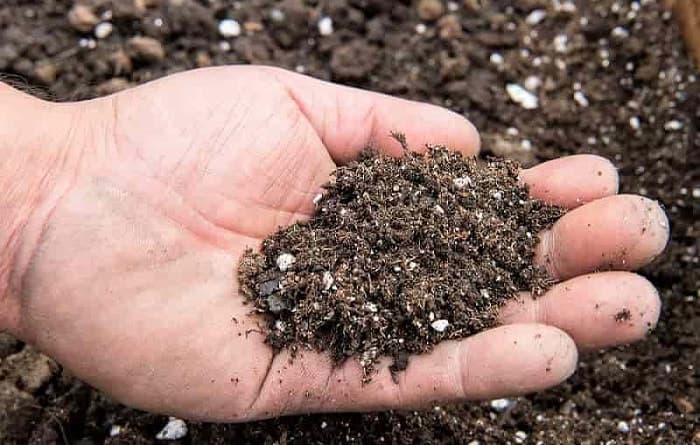 How is the soil where you plan to plant your palm tree?
Good palm care starts with understanding:
- whether your soil is sandy, loamy, or clay-heavy - how fast water drains.
- whether water pools after irrigation or rain.
- whether your area naturally lacks certain nutrients.
For instance, Florida is well-known for nutritionally poor soils. Which also receives lots of rain. Contrast that to California soils. Much of the state has less rainfall. Soils can range from organically rich to sandy deserts.
How to Water a Palm Tree
One of the most common palm-care mistakes is thinking there's one perfect watering schedule for all palms.
There isn’t.
A palm’s watering needs depend on species, age, soil type, climate, season, and/or whether the palm is in the ground or in a container. General rules:
- Newly planted palms need closer monitoring.
- Depending on where you live, your rainy seasons or yearly rainfall might need you to adjust the palm's watering schedule.
- Established palms often need deep, less frequent watering
- Constantly soggy soil can be just as harmful as prolonged dryness
Many like moisture, but very few like sitting in waterlogged soil. Your palm tree is now dependent on you for water that it needs. Check the soil, not just the calendar.
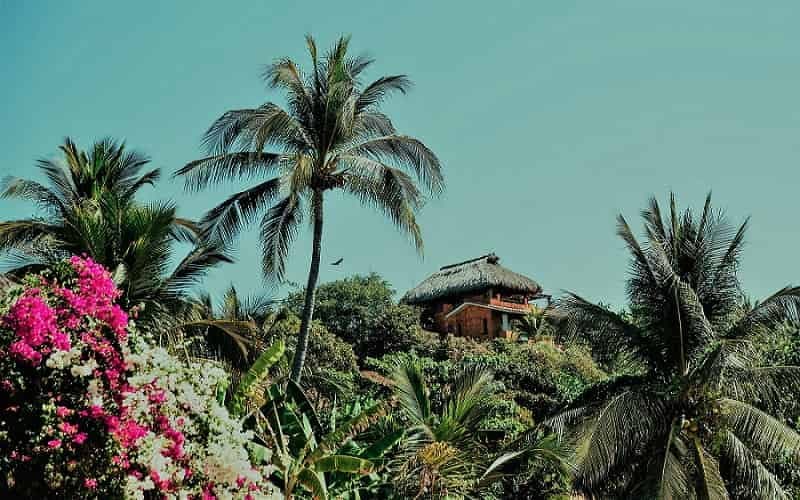 How thirsty will your palm plant be? How much rainfall does it get? Lots like here, or little?
Fertilizer for Your Palm
Palms can be sensitive to nutrient imbalances. In some regions, soil quality and rainfall patterns make deficiencies more likely.
When you fertilize:
- Use a Product Appropriate for Palms
- Follow label directions carefully
- Avoid over-applying
- Keep fertilizer away from direct contact with the trunk
Organic fertilizer is good overall, rather than a chemical formulation. Slow-release Palm Specialty Fertilizers are best. The potassium (K) to nitrogen (N) percentages should be about the same - higher potassium than nitrogen is fine. And low phosphorus levels.
Here's a formula for approximate palm tree dry fertilizer application:
- For each two-feet total height, use 1/2 lb. fertilizer.
- OR: (Total palm height/2) X 0.5 lb.
- Yet consider:
- Fully grown palms (more than 30ft/9.1m tall) maximum 15 pounds.
- Small Palms (under 8ft/2.4m tall) 2-5 lbs maximum.
Too much fertilizer can damage a palm. More is not better.
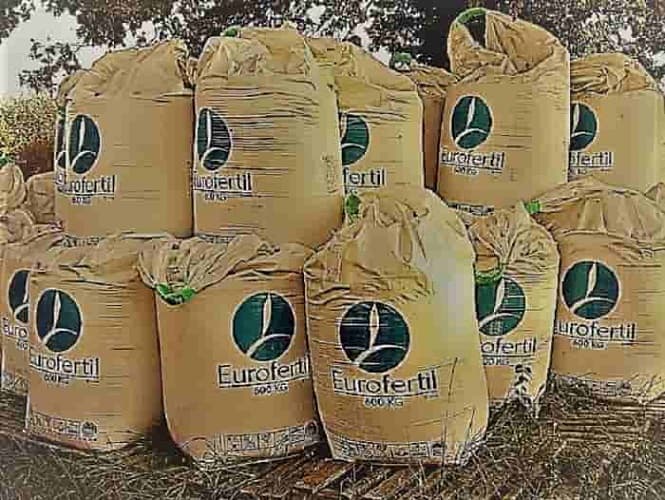 Bags of fertilizer waiting to be shipped to fertilizer sellers for repackaging.
Pruning Palm Trees
Palm pruning should be thrifty.
Only remove fully dead fronds. Green fronds still help feed the palm giving it energy. Fronds with any green should be left alone. Over-pruning weakens the tree and can leave it looking unnaturally “hacked.”
Avoid the common mistake of cutting off some green fronds just for appearance. Some have a Self-Pruning System anyway!
If you hire a pruning company, be sure they don't remove any green, healthy fronds. It's sad to see a tall palm trunk with a few green fronds sprouting out the top. As if it's a fountain!
But it's not, of course, it's a palm tree.
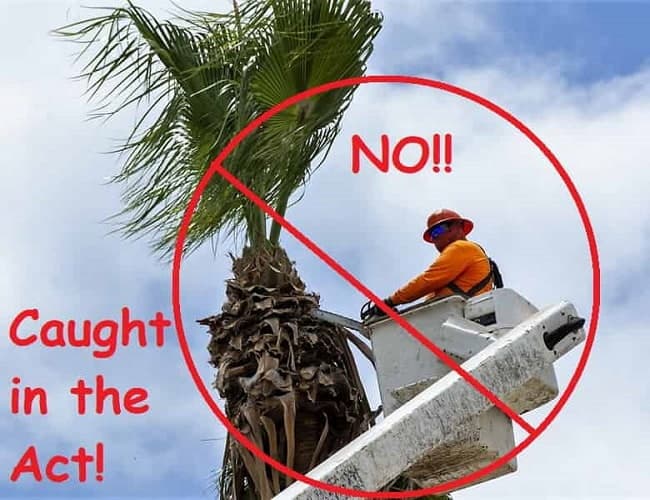
Do Your Own Palm Health Check-Up
Regularly Check Your Plant for Pests or Disease.
Schedule your palm exam at least monthly to look for abnormal signs. Look for signs of pest attacks from palm tree bugs, palm diseases, or nutrient deficiencies. Quick action is the best preventive care of a palm plant, avoiding uncontrolled outbreaks or deterioration.
Any of these Palm Tree Problems will damage palm fronds causing serious injury. Learn How to Maintain Palm Trees to keep them healthy year-round. Ongoing proactive prevention is the best way to stop problems in their tracks.
 Diagnosing a palm.
Indoor Palm Plant Care Basics
Indoor palms have some different needs versus landscape palms.
Light for Indoor Palms
If you're potting a Palm For Indoor Placement, it's very important to know its light requirements.
Many indoor palms do best in bright, indirect light. Too little light can weaken them. Too much harsh direct sun through glass can scorch the leaves. Generally they need about 5-6 hours worth each day.
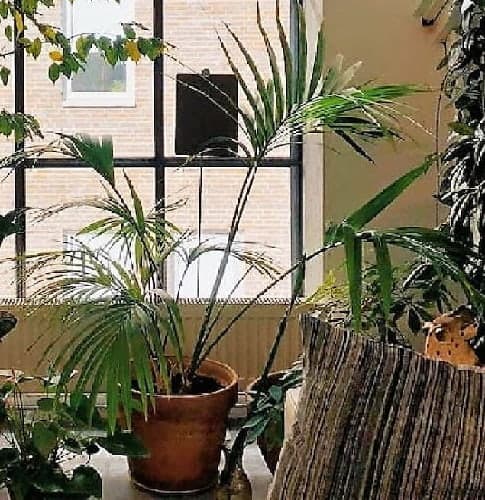 Will this window placement give that palm enough light? What do you think?
Watering Indoor Palms
Indoor palms should not be watered on autopilot. Pots dry out at different speeds depending on pot size, pot material, light exposure, indoor temperature, humidity and season.
Water thoroughly when appropriate, then let excess drain away through container openings. Never let a Decorative Outer Container trap water around the roots.
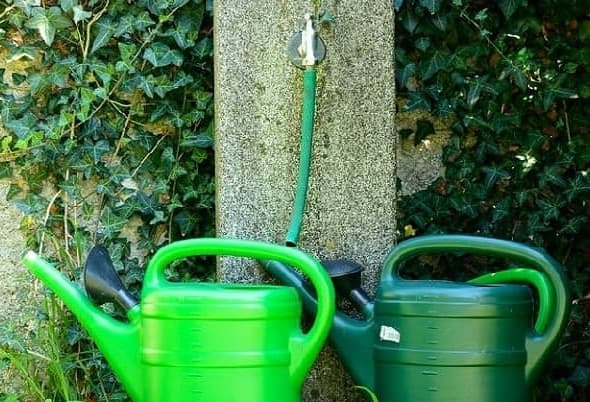
Potting Mix Affects Soil Drainage
A good indoor palm setup needs:
- Drainage holes
- A type of loose, well-aerated mix
- Enough moisture retention without being swampy
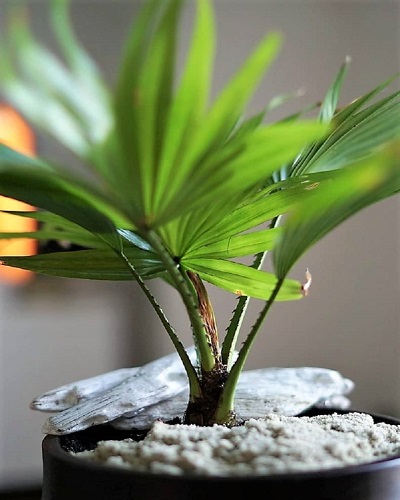 There should be drainage holes in the bottom of this container.
Most indoor palms do well with a soil mixture of approximately equal parts of regular Plant Potting Soil, clean sand, and Coconut Coir OR Vermiculite.
Why is that a good palm potting combo?
- It keeps the soil oxygenated.
- It helps maintain a good temp for the roots.
- It makes easy pathways for water seepage, yet aids good drainage, while keeping soil damp.
Indoor Palm Humidity Requirements
Some indoor palms struggle in very dry indoor air, especially during heating season. Dry frond tips and stress can become more common then.
Place a shallow bowl next to an indoor palm, and keep it filled with water. Or use a room humidifier.

Fertilizing Indoor Palm Trees
Container-grown palms use up available nutrients slower than landscape palms. Because their growth rate is much slower to even none at all!
Fertilize lightly using a slow-release palm fertilizer labeled N3/1P/2K with trace nutrients like manganese, boron and iron. If it's hard to find, This One is Close, lasts six months.
Don't overdo the amount, to avoid burn. Only use about 10-20% of the amount the label instructions recommend for outdoor palms.
Remember, too much is literally overkill!!
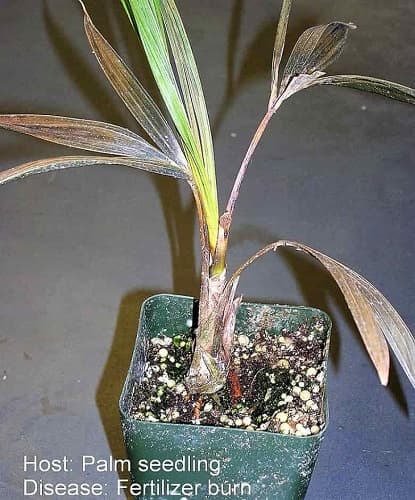 The looks of fertilizer burn.
Common Indoor Palm Problems to Watch For
Pest Watching Needed for Palms
Indoor palms can be vulnerable to spider mites, scale and/or mealybugs. You'll want to avoid infestation, which is harder to control.
Check the leaves regularly - especially undersides and stems at the leaf bases. Watch for sticky residue, speckling, webbing, distorted growth, or visible insects.
One solution is using a Large Plant Syringe to shoot them off.
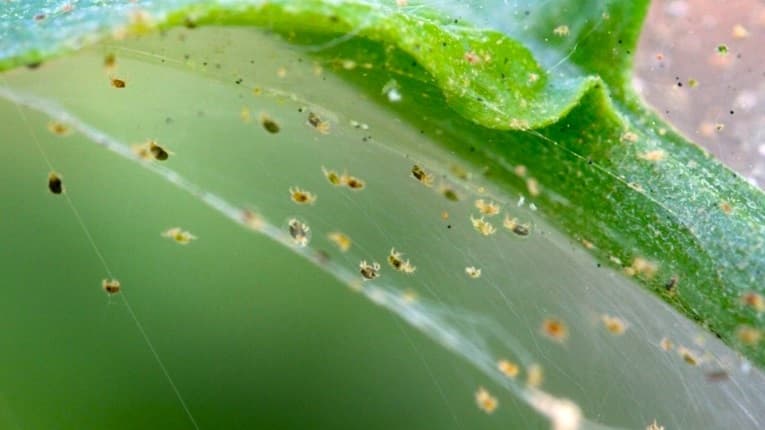 Squirt those spider mites off your palm!
Symptoms on Palm Fronds
If something looks wrong, act early. Palm problems are easier to manage when caught soon.
Brown Leaves
Low, fully old brown fronds may be normal. Widespread browning throughout the palm, or fast decline may be watering stress, nutrient issues, or other problems.
Yellowing
Yellow fronds can suggest overwatering, nutrient deficiency, or general stress, depending on the type of pattern that appears.
Drooping
Drooping can be caused by water issues, root stress, transplant shock, or poor growing conditions like soil compaction.
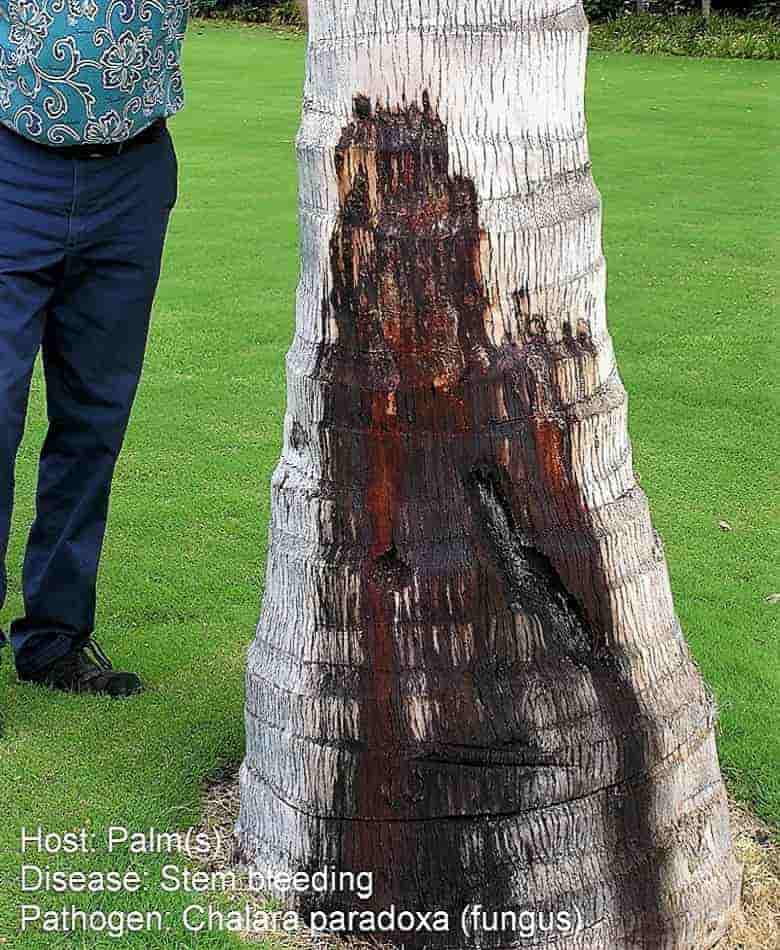
Disease or Rot
Soft tissue, foul smells, trunk issues like seeing growths on the surface, or persistent wet conditions can signal more serious problems.
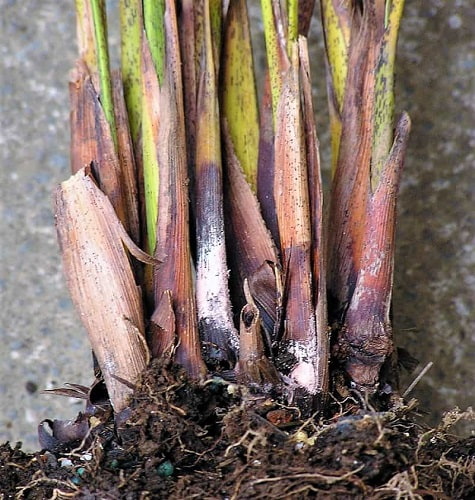 Areca Palm with Ganoderma fungal disease.
Common Palm Care Mistakes
These errors are made by many, but you can escape them.
Avoid these frequent mistakes:
- Planting the wrong palm for your climate.
- Watering too often without checking drainage.
- Letting a newly planted palm dry out too much.
- Fertilizing too heavily or with an incorrect type.
- Pruning live, healthy green fronds.
- Piling mulch against the trunk, like it's a volcano!
- Inoring the difference between indoor and outdoor care.
- Guessing at species needs instead of identifying the palm to know it well.
REFERENCES
BWSR agency programs (2026). Tech Talk: Nitrogen Stabilizer Efficacy. Minnesota Board of Water and Soil Resources. bwsr.state.mn.us/tech-talk-nitrogen-stabilizer-efficacy
Hodel1 DR, Downer AJ & Pittenger DR (2009 Oct–Dec). Transplanting Palms Hort Technology, 19(4).
Broschat TK (nd) Transplanting Palms in the Landscape. IFAS Extention CIR1047, UF.
Broschat TK, Meerow AW & Elliott ML (2017) Ornamental Palm Horticulture, Second Ed. Gainesville FL: University Press of Florida.
Helpful Next Steps on Mission: Palm Trees
If you need help with a specific palm care issue, these pages may help:
- Potted Palm Care
- Palm tree problems
- Brown palm leaves
- Planting basics
- Palm fertilizer
- Palm nutrients
- How to trim palm trees
- Indoor palm care
- Types of indoor palms
- How to identify palm trees
Palm Care FAQs
What is the most important part of palm care?
What is the most important part of palm care?
Matching the species to the right place is number one. Then know your palm's requirements for managing light, watering, and pruning properly.
How often should I water a palm tree?
How often should I water a palm tree?
It depends on the species, whether it's newly planted or established, your climate, and how quickly the soil dries. Check the soil type and drainage rather than relying only on a fixed schedule.
Should I cut off brown palm leaves?
Should I cut off brown palm leaves?
Fully dead fronds can usually be removed. But do not remove healthy green fronds just to make the palm look tidier. See our article on How to Prune Palms.
Can brown palm leaves turn green again?
Can brown palm leaves turn green again?
No. Once that tissue is dead, it does not turn green again.
The goal is to Fix the Underlying Problem and protect new growth.
Should I fertilize a newly planted palm?
Should I fertilize a newly planted palm?
Heavy fertilizing right after planting isn't good. It can burn the palm's roots. A newly planted palm is under stress, but still needs some assistance. Feed carefully and only as appropriate.
Do palms need full sun?
Do palms need full sun?
Some do, some do not. Palm species differ widely in light needs, from shade much of the day to full sun all day. It relates to their native clime.
- Are you looking for palms needing full sun? Check our Full Sun Palm Article.
- Or are you looking for palms that need shade? Check our Palms That Grow in Shade Article.
Final Takeaways for How to Care for Palms
If you remember only one thing about how to care for palms, remember this:
Palm care is easier when you know what palm species you have and what it naturally needs.
Start with light, water, soil, and gentle maintenance. Avoid overdoing things. Watch for early signs of stress. And when in doubt, identify the species before making major care decisions.

About the Authors: Karen McGowan is the creator of MissionPalmTrees.com, and The Palm Species Navigator, along with her husband Bill. Where they share easy to read palm tree expertise gained from years of finding and studying palms in varied climates. So readers will know palms, and can avoid costly palm planting mistakes. Learn more.
Don't Miss It: The Right Palm, The Right Place
Our free quick-reference guide is yours! So you can stop guessing which species will survive your local climate.
Along with that, the Palm Species Navigator for tips on species hardiness, seasonal care, and more. Click to enter your email & get your guide.
We Love Arizona Where Palm Trees Grow & We Love Helping Others Appreciate Them Too!
Member of Local First Arizona - Supporting Local Businesses Wherever They Are!
Privacy Policy> | Terms/Conditions/CC Licenses> | Advertising Disclosure> | Contact Us>
Copyright © 2022 - MissionPalmTrees.com All Rights Reserved

Do Not Copy - No use is permitted without permission. Scraping the contents of MissionPalmTrees.com website for the purpose of AI (artificial intelligence) LLM (large language model) training is strictly forbidden. Mission: Palm Trees Name & Logo Registered in the U.S. State of Arizona
As an Amazon Affiliate we earn from qualifying purchases.
A Production of Picture Rocks Networking LLC
This site is protected under U.S. and International copyright laws.