- Home
- So Many Species
- Parlor Palm
- Parlor Palm Indoors
Parlor Palm Indoor Plant | Complete Care & Growth Guide
The parlor palm indoor plant (Chamaedorea elegans) - often called the parlor palm tree - is one of the most widely grown indoor palms in the world.
This palm should easily do well for you. Our guide shows you all you need to know about an indoor parlor palm, including:
- Light requirements
- Proper watering and humidity needs
- Fertilizing guidelines
- Pruning practices
- Common problems and solutions
Feeling overwhelmed by palm tree problems or confusing information?
You’re not alone! At Mission: Palm Trees, we help everyday palm lovers grow, care for, identify & enjoy palms without baffling jargon or exhausting research.
We do the Authentic Research by cross-checking botanical data, while making palm tree info interesting & more fun to know.
What Is a Parlor Palm Tree?
Chamaedorea elegans is the Parlor Palm's scientific name.
Its native habitat is the rainforests of Southern Mexico, Belize and Guatamala. It grows below the taller trees, making it a small understory palm in these tropical forests.
It’s often called an “easy houseplant.”
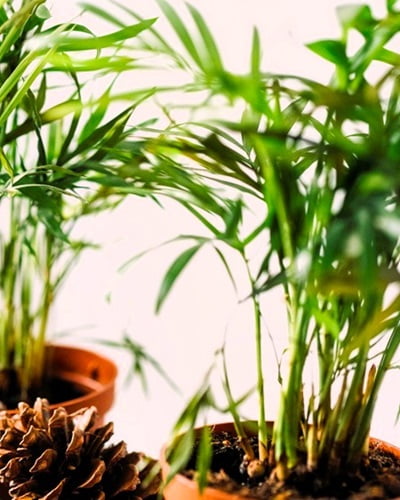 Easy to care for with a successful life.
Why is It Called a Parlor Palm?
During Victorian era England, advancements were being quickly made. People were learning more about the world, including the tropics, and they learned about palm trees.
The parlor palm earned its name during the Victorian era when it became a fashionable plant for decorating home parlors. Because it tolerates lower indoor light better than most tropical plants, it thrived inside homes long before electric lighting was common.
The Victorian houseplant craze was sparked by an important invention for the times. In 1833, a British amateur naturalist, Dr. Nathaniel Bagshaw Ward, designed a sealed glass-sided container (later called the Wardian case) that kept plants alive by controlling temperature and humidity.
Plants could now be shipped alive around the world. Inspiring enthusiasm for growing exotic plants indoors.
Wardian cases became fashionable fixtures In drawing rooms across Western Europe and the U.S. Starting with ferns, orchids, and ultimately as a potted parlor palm indoor plant. By the late 1890s, that era ended when parlors filled with vines, orchids, and potted palms came to be seen as old-fashioned.
Yet that common name has stuck ever since.
Parlor Palm Tree Quick Facts
- Common Names: Usually It's a Parlor Palm. But also called Neantha bella, Good-luck palm, Collinia and Bella.
- In Guatamala: pacaya, pacayito, xate, kiik
- In Mexico: tepejilote, palma camedor, pesmilla, palmilla de hojas, angostas, palmita camedor, palma fina, tutchast
- Mature Height: Indoors it might eventually get about 6ft/1.8m.
- Growth Rate: It's naturally a slow-grower, indoors even more slowly.
- Light Preference: No full sun. Instead choose a spot aside a window with filtered light.
Parlor Palm Indoor Plant Benefits
The Parlor Palm indoor plant is a popular indoor choice because of several practical functional benefits:
Air Purification: It's a top performer in NASA’s Clean-Air study. The fronds filter your home's air, and absorbs typical indoor toxins like formaldehyde and benzene.
Beginner Friendly: It's about the easiest Palm Species to grow successfully, even for people new to plant care.
Low-Light Capability: It does just fine in filtered indirect light through windows. Other indoor palms would struggle with the low light Parlor Palms are fine with.
Pet-Safe: Yes, but See the Full Toxicity Section Below.
Early Blooming: A fun characteristic is seeing small yellow flowers pretty quickly. Sometimes blooming when it's only 12in/30cm tall.
Tropical Vibe: Having a parlor palm indoor plant gives you a tropical aura, no matter where you live. It provides calm and is often a mood-lifter.
Mission: Palm Trees is made possible by readers like you! Some links on this page are affiliate links. If you purchase through them, we may earn a small commission at no extra cost to you. Thanks for your support! Learn more>
How to Identify a Parlor Palm for Sale in a Store
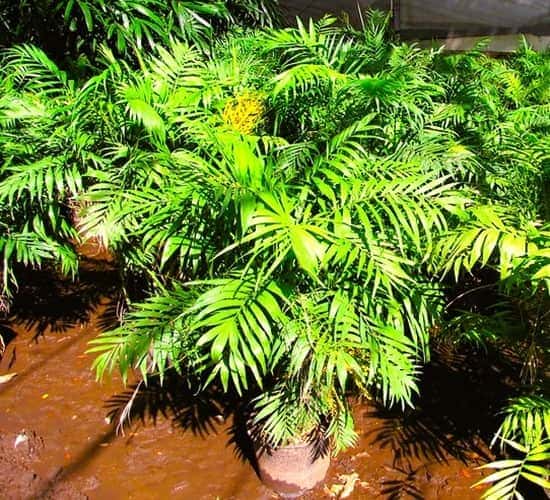
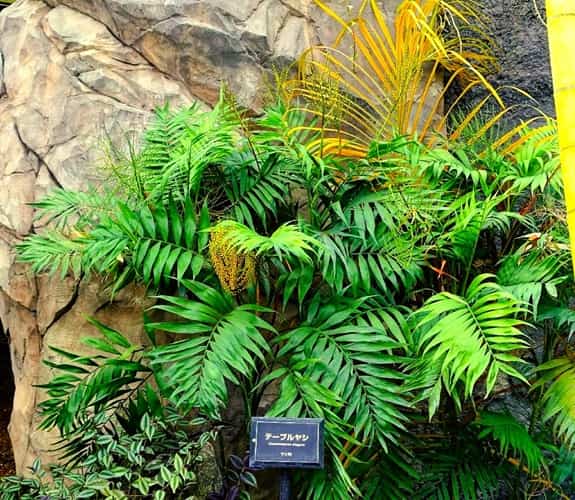
For Purchasing a Parlor Palm Use Key Identification Traits of Chamaedorea elegans:
- Slender cane-like solitary stem. Multiple trunks are often grouped together in one container, for a dense appearance. But they don't cluster out from one main trunk.
- Pinnate fronds with narrow leaflets along a central stem (rachis).
- Orange inflorescence (flower stem) grows upright, branching with tiny flowers producing small black fruit.
Look-Alike Chamaedorea Palm Differences Compared to Parlor Palms:
- C.erumpens - the Bamboo Palm. It does cluster - sprouting more stems. Fewer, wider leaflets. Grows more quickly.
- C.microspadix - the Hardy Bamboo Palm. It only grows 4-6 fronds sprouting nearly down to the solid green base. Drooping inflorescence (flower stem) has cream-colored flowers. It's freeze tolerant.
- C.radicalis - Has solitary & trunkless (on or under the ground) forms. Flowers are yellow orange, with orange fruit.
- C.seifrizii - the Reed Palm. It clusters densely, with longer petioles (leaflet stems).
- C.tepejilote - the Pacaya Palm. Usually solitary, but sometimes clustering. Grows more quickly, only 5-7 fronds. Short green crownshaft.
- C.humilis - the Mediterranean Fan Palm. Palmate fronds. Clustering (sometimes solitary) trunks covered with dense fibers. Orange/reddish-brown fruit.
Recent Article


-
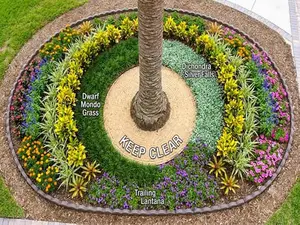
Landscaping Around a Palm Tree: Best Plant Ideas
 Choose companion plants, edging, and mulch that make your palm tree stand out, with landscaping around a palm tree ideas that protects the trunk.
Techniques for Proper Parlor Palm Care
It's quite hardy, and Parlor Palm indoor plant care is pretty easy! Making it a popular houseplant.
Yet it's a matter of it's native areas. Imitate its rainforest origins and it's able to stay healthy and attractive indoors for many years.
Before care, let's understand structure.
- They may look like they're clustering, but they're not.
- They're solitary feather palms.
When treated like any indoor plant, it can slowly decline.
Parlor Palm Light Requirements
The parlor palm is a very reliable low-light palm.
They do well in moderate to low-light conditions. Like the light it received in its rainforest conditions.
The ideal range is 25-50 foot candles.
- That's like a typical school classroom, giving enough light for reading and writing.
- Or think of walking the aisles of your local grocery store, also about that range.
In winter light strength is lower. You could place your parlor palm just to the side of a curtained window. Yet in summer that placement needs adjusting. You'll want to protect the fronds from getting scorched - like sunburn.
Placement Tips:
- North or east-facing windows are ideal. A few feet back from a west window with filtering drapes may also work.
- Best Light: Bright, but indirect
- Tolerates: Moderately low indoor light
- Avoid: Direct afternoon sun
If growth is stagnant for years, it likely needs a bit more light.
Proper Watering for a Parlor Palm
Overwatering is the #1 reason Parlor Palms falter indoors. Here's the Best Plan for Watering your parlor palm.
YOUR CHECK: Every 7-10 days test the soil.
- Stick your finger in the dirt to evaluate it.
- Water when the top inch of soil feels dry.
HOW OFTEN TO WATER:
- Avoid watering on a schedule alone.
- Check the soil instead.
- Avoid Overwatering, to prevent root rot.
PROPER WATERING TECHNIQUE:
- Water your parlor palm deeply, letting water drain from container openings.
- Observe the container drainage. Does a good amount drain into the saucer? It should.
- Empty the saucer.
Parlor palms prefer even moisture, but not soggy soil.
Humidity Preferences for Your Parlor Palm
Parlor palms can tolerate average indoor humidity, but its ideal is 40–60%, with temperatures from 65–80°F/18–27°C.
OVERLY DRY AIR SIGNS:
- Brown or crispy leaf edges
- Even slower growth
- Spider mites on leaflet's lower surfaces
HOW TO INCREASE HUMIDITY:
- Use a pebble tray
- Group plants together
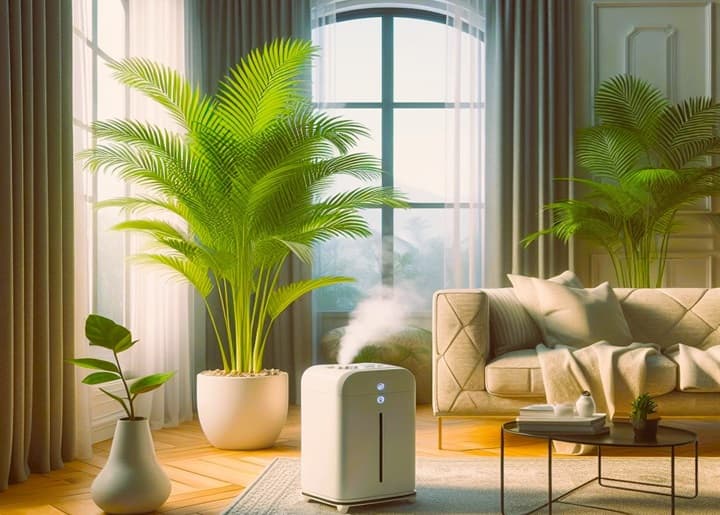
- Run a room humidifier
- Keep away from heating vents
Misting alone is not sufficient long term. But if mites appear, you can squirt frond undersides with water from A Large Syringe.
How Do You Fertilize a Parlor Palm?
Indoor parlor palms are relatively light feeders. As slow growers their Fertilizer Nutrition requirements are low.
FERTILIZING SCHEDULE
- Spring through Autumn
- Every 6 months, April & October works.
- With Liquid Fertilizer, follow container directions for quantity to apply every 3 months. But no more than once a month.
FERTILIZER TYPE
"Ornamental Palm Horticulture" (Broschat, Meerow, Elliott), our go-to for palm management, recommends 3N-1P-2K. But they do say Controlled-Release Fertilizer is preferred - liquid is acceptable but less efficient.
Yet don't use too much - more is not better. Where C.elegans outdoors would need about 1 cup of fertilizer, indoors use much less. 1/2 teaspoon or 2 grams top-dressed in the soil twice a year.
Too much fertilizer causes salt buildup that leads to root burn stress. When in doubt, use less fertilizer.
Repotting Considerations
Parlor palms prefer slightly snug roots. They dislike heavy root disturbance, so repotting isn't necessary very often.
REPOT ONLY:
- When roots circle heavily
- Every 2–3 years at most
- Disturb roots as little as possible. These palms dislike excessive handling.
SOIL REPOTTING:
Use a Well-Draining Potting Mix with Perlite & Coconut Coir. Choose A Larger Container with drainage holes.
Pruning a Parlor Palm Indoor Plant: Why Not to Cut
Since their growth is slow, every green frond matters.
Perhaps this palm understands that, as it naturally sheds old worn out fronds. So Trimming the Fronds is not necessary.
Never:
- Trim green fronds for shape
- Cut stems hoping for branching, as palms do not branch after pruning
Common Parlor Palm Problems
Parlor Palms aren't problematic. But here's what to watch for:
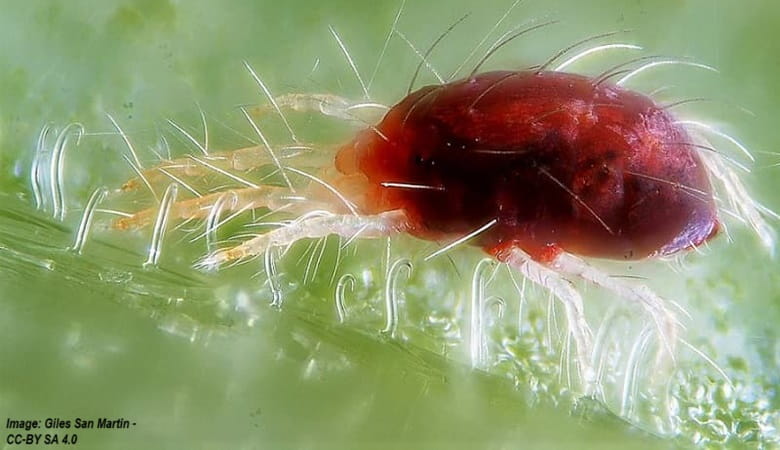
- Spider mites are the most common pests
- Cause: humidity too low.
- Prevent: Regularly inspect fronds: for scattered pale areas and tiny brown spots | check undersides for white webs.
- Fix: If you see these symptoms, spray water Using a Large Syringe. With enough fronds untouched, trim off the affected one.
- Yellowing color between veins on newest fronds and/or gnats flying around the plant: Usually from overwatering or compacted soil. Leads to iron deficiency.
- Fix: Solve the cause:
- Check soil moisture (with a Moisture Meter - We Love This One with 4 Checks & it Tilts) & improve drainage.
- Water even less than you've been doing.
- Brown tips on oldest leaves: from too dry air, fertilizer salt buildup, chemical sensitivity to tap water, or inconsistent (over/under) watering. Test one thing at a time.
- Fix/Prevention:Raise humidity.
- Occasionally flush soil with distilled or filtered water. Let it drain well.
- If you're using liquid fertilizer, switch to time-released.
- Try using filtered or distilled water.
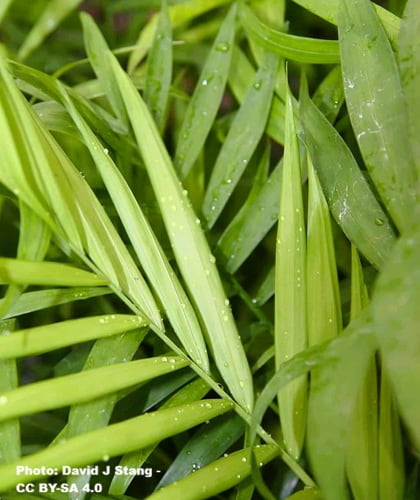 Regularly take a close look at your Parlor Palm for problem prevention.
Are Parlor Palms Toxic to Pets?
Parlor palms are normally non-toxic to both cats and dogs.
That's why Chamaedorea elegans is a popular palm species to grow indoors in homes with pets. Even so, chewing on fronds or fruit can cause stomach irritation in some animals.
- The fruit & fronds are an irritant with oxalate crystals in the pulp. As long as your pet doesn't eat the fruit it's fully safe.
- But if your pet likes to chomp on plants, see the One Thing You Should Know.
Parlor Palm's Growth: Rate and Size
A parlor palm indoor plant naturally grows slowly. Its size is manageable for years.
How Fast Does a Parlor Palm Grow?
The Chamaedorea elegans, especially potted indoors is a natural slow-grower. Yearly growth anywhere from 2-6in/5-15cm. Depending on its placement, and its care. But it has its natural limit for growth.
In its Native Habitats it gets high humidity, and only light filtered through taller trees.
Some stems may be slightly "faster," while other stems might grow at less than a snail's pace! Either way, it can take years to reach full size.
That normal, slow growth rate, along with multiple trunks in a pot, helps them look compact. Another reason they're well suited to indoor container growing.
Why Does a Parlor Palm Grow Slowly?
Its slow growth has developed over eons.
- It's an adaptation that began with its origins in rainforests. It evolved to survive life in a forest's understory where light is limited.
- Evolving in rainforests is a secondary reason related to the first. Since sunlight is needed for its own food production (photosynthesis), its needs for growth are more slowly gotten.
How Big Does a Parlor Palm Grow?
Indoors, a parlor palm typically grows 4–6ft/1.2-1.8m tall and about 3-4ft feet wide.
Because it grows slowly, most indoor plants gain no more than a few inches of height each year. And that's true of Chamaedorea elegans.
You want to consider their final height for evaluating their placement. That is, if you don't mind moving it around!
Parlor Palm Indoor or Outdoor
A Comparison Chart
| Category | Indoors | Outdoors |
|---|---|---|
| Growth Rate | Very slow | Slightly faster |
| Mature Height | 4–6 ft (1.2–1.8 m) | Up to 8 ft (2.4 m) |
| Climate Conditions | Increase humidity | Warm climates |
| Light Needs | Filtered sun at a north or east-facing window | Bright indirect shade (e.g., under taller plants or a pergola) |
REFERENCES
Keogh L. (2017, May 17) The Wardian Case: How a Simple Box Moved the Plant Kingdom. arboretum.harvard.edu/arnoldia-stories/the-wardian-case-how-a-simple-box-moved-the-plant-kingdom/
Gardening (2025, May 28) Chamaedorea Elegans Care and Growth - A Master-Guide for Effortless Indoor Jungle Style. Al Ardh Al-Khadra. aaaksc.com/growing-chamaedorea-elegans/
The Uhrin Brothers (2025, June 17). Chamaedorea elegans (Parlor Palm): A comprehensive Growing Guide for Enthusiasts & Collectors. viriar.com/blogs/palms-tree-encyklopedia/chamaedorea-elegans-parlor-palm
Frequently Asked Questions
for Parlor Palm Indoor Plant
How often should you water a Parlor Palm?
How often should you water a Parlor Palm?
Water a parlor palm when the top inch of soil feels dry. In most homes that's about every 7–10 days. The soil should stay lightly moist but never soggy, since overwatering palms is the most common problem. Root rot will creep in! Get More Details>
Is a parlor palm a good indoor plant?
Is a parlor palm a good indoor plant?
Yes, it is. Why? Because indoors:
- A parlor palm typically grows about 4–6 feet tall and around 2–3 feet wide.
- It grows slowly, gaining only a few inches of height each year.
- It fits perfectly into a room's corner space, in lower light conditions.
We've written above About Its Several Benefits.
How fast does a Parlor Palm grow?
How fast does a Parlor Palm grow?
Parlor palms are naturally slow-growing palms. Indoors they often grow only about 2–6 inches per year. Their slow growth rate is one reason they are well suited for long-term container growing indoors. See More Facts About Their Rate>
Are Parlor Palms good for beginners?
Are Parlor Palms good for beginners?
Yes. Parlor palms are often recommended for beginners because they tolerate lower light levels and require relatively simple care. As long as they are not overwatered and receive moderate light, they can remain healthy for many years.
Why is it called a Parlor Palm?
Why is it called a Parlor Palm?
The parlor palm became popular during the Victorian era when it was widely used as a decorative plant in home parlors. Because it tolerates indoor light levels better than most tropical plants, it thrived inside homes long before electric lighting was common.
Where is the best place to put a Parlor Palm?
Where is the best place to put a Parlor Palm?
The best placement is near a window that provides bright but indirect light. North- or east-facing windows are ideal. Keep it away from strong direct afternoon sun and away from heating vents that can dry the air. We Give You More Light Advice Here>
Are Parlor Palms toxic to pets?
Are Parlor Palms toxic to pets?
Parlor palms are generally non-toxic to both cats and dogs. However, if your pet chews on frond parts or fruit, it will likely have stomach distress.
We have This Section for Why That Is>
What is the lifespan of a Parlor Palm?
What is the lifespan of a Parlor Palm?
With proper care, a parlor palm can live for many years indoors. If it is well-maintained it can do well in the home for a decade, possibly more.
Final Perspective: Why Parlor Palms Fail
It’s not because they're “difficult.” Parlor palm indoor plants are one of the easiest palms to grow and maintain, according to University Extension Services>
They fail because:
- They are treated like generic tropical foliage.
- They are overwatered in low light.
- They are over-fertilized in winter.
Understand their understory palm nature in their native home. Then they'll become dependable, long-lived indoor palms.
You might like these
Landscaping Around a Palm Tree: Best Plant Ideas
Choose companion plants, edging, and mulch that make your palm tree stand out, with landscaping around a palm tree ideas that protects the trunk.
Where Do Palm Trees Grow? Maybe More Places Than You Thought!
Wondering where do palm trees grow? For sure it's the tropics & subtropics. They're more versatile than that, though. Even doable for temperate regions.
Landscaping With Palm Trees - Ideas & Top Tips!
Transform your yard when you discover our easy landscaping with palm trees ideas, perfect for any skill level. See simple designs that make a big impact.



About the Authors: Karen McGowan is the creator of MissionPalmTrees.com, and The Palm Species Navigator, along with her husband Bill. Where they share easy to read palm tree expertise gained from years of finding and studying palms in varied climates. So readers will know palms, and can avoid costly palm planting mistakes. Learn more.
Don't Miss It: The Right Palm, The Right Place
Our free quick-reference guide is yours! So you can stop guessing which species will survive your local climate.
Along with that, the Palm Species Navigator for tips on species hardiness, seasonal care, and more. Click to enter your email & get your guide.
We Love Arizona Where Palm Trees Grow & We Love Helping Others Appreciate Them Too!
Member of Local First Arizona - Supporting Local Businesses Wherever They Are!
Privacy Policy> | Terms/Conditions/CC Licenses> | Advertising Disclosure> | Contact Us>
Copyright © 2022 - MissionPalmTrees.com All Rights Reserved

Do Not Copy - No use is permitted without permission. Scraping the contents of MissionPalmTrees.com website for the purpose of AI (artificial intelligence) LLM (large language model) training is strictly forbidden. Mission: Palm Trees Name & Logo Registered in the U.S. State of Arizona
As an Amazon Affiliate we earn from qualifying purchases.
A Production of Picture Rocks Networking LLC
This site is protected under U.S. and International copyright laws.