- Home
- So Many Species
- Parlor Palm
Parlor Palm Tree (Chamaedorea elegans): Identification, Care, and Growing Guide
The parlor palm tree (Chamaedorea elegans) is likely the most widely grown indoor palms in the world.
This palm will easily do well for you, when you know its specific light, moisture, and other health needs. Our guide shows you all you need to know about the parlor palm, including:
- Light requirements
- Proper watering and humidity needs
- Pruning practices
- Common problems and solutions
Feeling overwhelmed by palm tree problems or confusing information?
You’re not alone! At Mission: Palm Trees, we help everyday palm lovers grow, care for, identify & enjoy palms without baffling jargon or exhausting research.
We do the Authentic Research by cross-checking botanical data, while making palm tree info interesting & more fun to know.
What Is a Parlor Palm Tree?
Chamaedorea elegans is the Parlor Palm's scientific name.
Its native habitat is in the rainforests of Southern Mexico, Belize and Guatamala. It grows below the taller trees, making it a small understory palm in these tropical forests.
It’s often called an “easy houseplant.”
Parlor Palm Tree Quick Facts
C. elegans is about the most popular indoor palm throughout the world.
- Common Names: The most usual is parlor palm. But is also called Neantha bella, Good-luck palm and Bella.
- Mature Height: Indoors it gets about 4ft/1.8m, but can double in size outdoors.
- Growth Rate: It is naturally a slow-grower, indoors even more slowly.
- Light Preference: Because of its rainforest origins, it won't tolerate full sun - instead low amounts of dappled sunlight is all it needs.
- Indoor Suitability: Excellent
- Indoors VS Outdoors: It can do well with either placement, although most like it potted into an indoor container. Outdoors it is suited for USDA zones 10b-11.
- Pet Safety: The fruit is an irritant with oxilate crystals in the pulp. As long as your pet doesn't eat the fruit it's fully safe.
Why is It Called a Parlor Palm?
During the Victorian era in England, houseplant fever began when amateur naturalist Nathaniel Bagshaw Ward designed a container (the Wardian case) with a controlled environment that kept plants alive.
This allowed live plants to be successfully shipped around the world. Victorians began growing exotic plants indoors.
Parlors were decorated with potted palms. Chamaedorea elegans became a favorite because it tolerated low light inside their dark homes, it was adaptable to container growing and it had a compact size compared with many palms.
People began calling it the "Parlor Palm."
Basic Care Requirements for a Parlor Palm
Remember to consider its origins for this Palm Species' natural needs.
Then it can stay healthy and attractive indoors or out for many years. When treated like any old tropical plant, it can slowly decline.
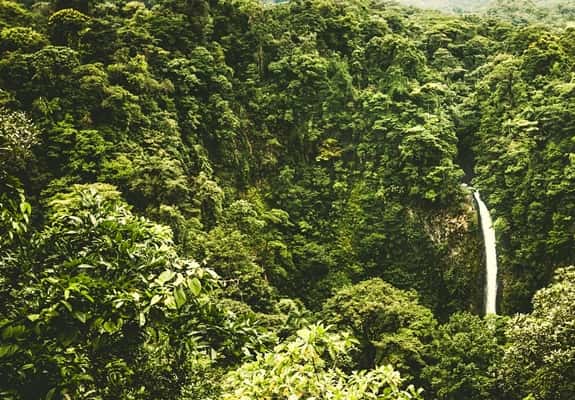 Imagine being a small Chamaedorea elegans growing beneath all these taller trees in a rainforest.
Here's a quick reference guide for Chamaedorea elegans indoor care. Much of this also applies to caring for Parlor Palms Outdoors.
Care Factors
- Lighting: Bright, filtered indirect light. Reflected, but away from a window indoors. Underneath taller plants or on the north side of a building outdoors.
- Watering: Water when top 1–2 inches of soil are dry. Potted indoors, soil should be well aerated and evenly moist - avoid sogginess. Outdoors it needs consistent watering in well-draining soil - think of its rainforest habitat.
- Humidity: Moderate range from 40–60% if possible.
- Soil: Think of rainforest soil, typically humus-filled. Add coconut coir to the potting medium, and incorporate some into outdoor soil.
- Fertilizing: Liquid fertilizer can work for potted palms. For outdoors, scatter controlled release pellets every 6 weeks in spring and summer.
- Pruning: None needed, it drops its old fronds.
See our full guide to Growing Palms Indoors for more detailed care.
How to Identify a Parlor Palm
Many small-sized palms can look similar, especially those potted for sale (which are often mislabeled). Here are the Parlor Palm Tree traits.
TRUNK
Solitary, with a single slender (barely 1-in/2.54cm thick) light green stem. Trunk has dark greens rings, bamboo-like.
Potted C. elegans may seem clustering, but they're not. Nurseries often plant at least three seeds to a pot. That makes it seem to have spreading multiple trunks. But each trunk is a separate palm.
LEAVES
Arching pinnate (feather) fronds get up to 3ft/90cm long - depending if in or outdoors. Narrow spear-shaped leaflets (about 20-40 of them) grow opposite each other along a smooth central stem (rachis). Light to medium green in color, depending on lighting and Palm Tree Fertilizer Used.
GERMINATION
Separate male or female plants.
An orange-red, upright, branching flower stalk (inflorescence) produces yellow flowers. Which source the tiny, black fruits.
IDENTIFICATION CONFUSIONS
Some other Chamaedorea species look similar:
- C. cateractarum (Cat Palm) is clustering, spreading out like a hedge outdoors.
- C. costaricana (Costa Rican Bamboo Palm) also clusters. Much taller than elegans, it can attain 20ft/6m. Trunk coloring is opposite, dark green with light green rings.
- C. radicalis is more cold-hardy. Has a crownshaft & orange/red fruit.
- C. seifrizii clustering dark green trunks (vague crownshaft) are taller, to 12ft/4m. Trunk rings are faint.
Recent Posts


-
Where Are Palm Trees Native? Surprising to You?!
 Where are palm trees native? Were you wondering. Meaning where are they indigenous, endemic, or naturally originally from. You'll discover it!

How Fast Does a Parlor Palm Grow?
Just as they did in the rainforest understory, a parlor palm is naturally slow growing.
Indoors it usually achieves 2–6in/5-15cm per year. Outdoors, in a more natural environment it will grow a little bit faster. Either way, Chamaedorea elegans can take years to reach full size.
But it's good to note this normal rate keeps them compact. One reason they're well suited to indoor container growing.
Can Parlor Palms Grow Indoors or Outdoors?
Although a parlor palm is more popular for growing indoors - just like in their Native Habitat they do fine with proper placement and care.
Growing Parlor Palms Indoors
Very easy, some say they seem almost indestructible.
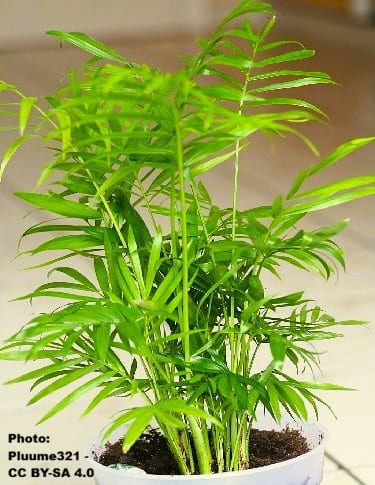
Growing Parlor Palms Outdoors
Outdoors find a shadier spot for your parlor palm. Like under the crown of a tall tree.
It's only suitable for USDA zones 10b-11. It won't tolerate temperatures under 35oF/1.7oC. So if you get freezing winter temps, it's a no-go.
Good soil with humus, as in a rainforest, would be helpful. And regular watering.
Some plant several young plants together in an area as a ground cover.
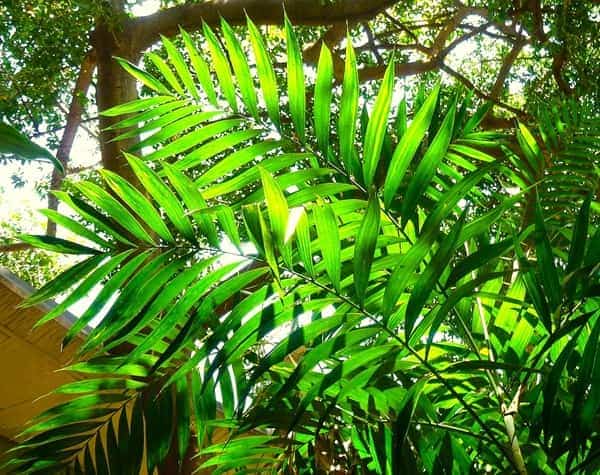 C. elegans growing well beneath taller trees.
Growing Parlor Palm Indoors vs Outdoors
INDOORS:
- Very slow Growth rate
- Height about 4-6ft/1.2-1.8m
- Light: Indirect & filtered from a nearby window
- Humidity: Suprisingly tolerates lower levels
OUTDOORS:
- Slowly, more quickly than indoors
- Height up to 8ft/2.4m
- Light: Bright, filtered indirectly shaded from sun
- Humidity: Naturally higher than indoors
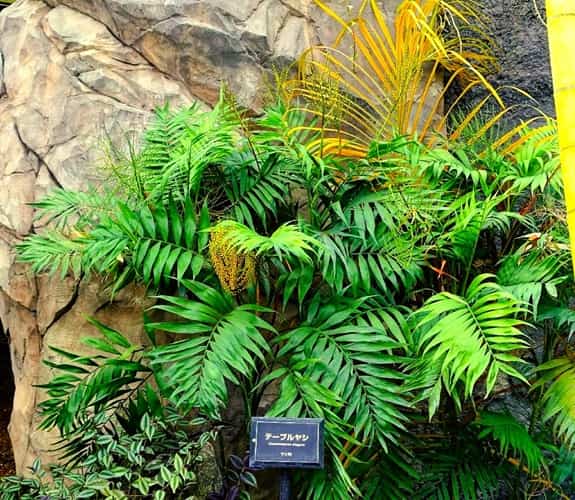 Parlor Palm outdoors in a botanical garden.
Common Parlor Palm Problems
Watch for anything on your parlor palm tree that doesn't seem right. Parlor palms are generally reliable indoor palms, but Problems Can Appear. For instance, you could see:
- Yellow leaves
- Brown leaflet tips
- No growth
- Fluffy white webs on leaflets
POSSIBLE CAUSES:
Yellowing Leaves – Most often from overwatering, with roots sitting continuously in overly wet soil.
Brown Leaf Tips – Probably from dry air, fertilizer salt buildup, or inconsistent watering. See more about Brown Leaflet Tips on a Parlor Palm.
Slow or Weak Growth – Often related to very low light. While parlor palms tolerate shade well, they grow best in bright indirect light.
White Webs on Leaflets - Spider mites are common attackers, expecially indoors.
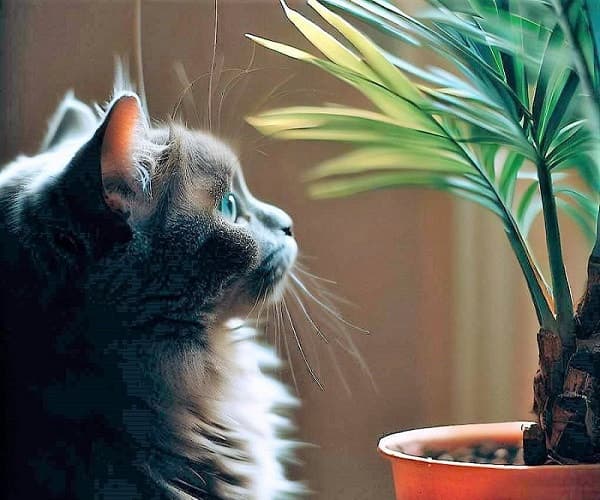
Are Parlor Palms Toxic to Pets?
Parlor palms are generally considered non-toxic to both cats and dogs.
Even so, chewing on leaf stem or fruits exposes them to sap and pulp. These areas contain calcium oxalate crystals. If swallowed They Can Cause Mild Toxicity with stomach irritation in some animals.
REFERENCES
Keogh L. (2017, May 17) The Wardian Case: How a Simple Box Moved the Plant Kingdom. arboretum.harvard.edu/arnoldia-stories/the-wardian-case-how-a-simple-box-moved-the-plant-kingdom/
Frequently Asked Questions About Parlor Palms
How Often Should You Water a Parlor Palm?
How Often Should You Water a Parlor Palm?
Water a parlor palm when the top inch of soil feels dry. In most homes this is about every 7–10 days. The soil should remain lightly moist but never soggy, since overwatering is the most common cause of root rot.
How Big Does a Parlor Palm Grow?
How Big Does a Parlor Palm Grow?
Indoors, a parlor palm tree typically grows about 4–6 feet tall and around 2–3 feet wide. When grown outdoors in warm climates, it can reach heights of about 8 feet.
Because this species grows slowly, most indoor plants gain barely a few inches of height each year.
How Fast Does a Parlor Palm Grow?
How Fast Does a Parlor Palm Grow?
Parlor palms are naturally slow-growing palms.
Indoors they might grow as little as 2 inches per year. Their slow growth rate helps them remain compact, which is one reason they are great for long-term container growing indoors.
Are Parlor Palms Good for Beginners?
Are Parlor Palms Good for Beginners?
Yes. Parlor palms are often recommended for beginners because they tolerate lower light levels and require relatively simple care. As Long as They are not Overwatered and receive moderate light, they can remain healthy for many years.
Why Is It Called a Parlor Palm?
Why Is It Called a Parlor Palm?
The parlor palm became popular during the Victorian era when it was widely used as a decorative plant in home parlors. It prospered inside homes long before electric lighting was common.
Where Is the Best Place to Put a Parlor Palm?
Where Is the Best Place to Put a Parlor Palm?
The best placement is near a window that provides bright but indirect light. North- or east-facing windows are usually ideal.
The plant should be kept away from strong direct afternoon sun and away from heating vents that can dry the air.
Are Parlor Palms Toxic to Pets?
Are Parlor Palms Toxic to Pets?
Parlor palms are considered non-toxic to both cats and dogs, making them a safe palm species for households with pets. However, pets that chew large amounts of any part will probably have stomach upset.
What Is the Lifespan of a Parlor Palm?
What Is the Lifespan of a Parlor Palm?
With proper care, a parlor palm tree can live for many years indoors. While indoor plants may not live as long as those growing outdoors in tropical environments, it's common for well-maintained plants to flourish for a decade or more.
Final Perspective: Why Parlor Palms Could Fail
It’s rarely because they are “difficult.” Parlor palms are one of the easiest indoor palms to grow and maintain.
They fail because:
- They are treated like generic tropical foliage.
- They are overwatered in low light.
- They are over-fertilized in winter.
Understand their understory palm nature, their native home. Then they'll become dependable, long-lived indoor palms.
You might like these
Landscaping Around a Palm Tree that Looks Polished
Landscaping around a palm tree is easier with layered plants, edging, color, and climate-smart ideas that make one standout palm feel finished.
Where Do Palm Trees Grow? Maybe More Places Than You Thought!
Wondering where do palm trees grow? For sure it's the tropics & subtropics. They're more versatile than that, though. Even doable for temperate regions.
Landscaping With Palm Trees - Ideas & Top Tips!
Transform your yard when you discover our easy landscaping with palm trees ideas, perfect for any skill level. See simple designs that make a big impact.




About the Authors: Karen McGowan is the creator of MissionPalmTrees.com, and The Palm Species Navigator, along with her husband Bill. Where they share easy to read palm tree expertise gained from years of finding and studying palms in varied climates. So readers will know palms, and can avoid costly palm planting mistakes. Learn more.
We Love Arizona Where Palm Trees Grow & We Love Helping Others Appreciate Them Too!
Member of Local First Arizona - Supporting Local Businesses Wherever They Are!
Privacy Policy> | Terms/Conditions/CC Licenses> | Advertising Disclosure> | Contact Us>
Copyright © 2022 - MissionPalmTrees.com All Rights Reserved

Do Not Copy - No use is permitted without permission. Scraping the contents of MissionPalmTrees.com website for the purpose of AI (artificial intelligence) LLM (large language model) training is strictly forbidden. Mission: Palm Trees Name & Logo Registered in the U.S. State of Arizona
As an Amazon Affiliate we earn from qualifying purchases.
A Production of Picture Rocks Networking LLC
This site is protected under U.S. and International copyright laws.