- Home
- All Kinds of Palms
- Shade Palms
Palms That Grow in Shade
Complete Guide to Shade-Loving Palm Trees
Palms that grow in shade are those species known for tolerance of lower light conditions outdoors or that can grow indoors.
Most palms that are shade-tolerant evolved as understory plants. Which means they naturally grow beneath taller canopy trees in tropic-like forests.
Feeling overwhelmed by palm tree problems or confusing information?
You’re not alone! At Mission: Palm Trees, we help everyday palm lovers grow, care for, identify & enjoy palms without baffling jargon or exhausting research.
We do the Authentic Research by cross-checking botanical data, while making palm tree info interesting & more fun to know.
Understanding Shade Requirements for Palm Trees
Palms that grow in shade are able to do fine with limited sunlight.
Because in their native habitat, they're found in a forest's understory. Which means:
- They only get filtered sunlight coming through taller trees.
- They're environment may be north-facing slopes, getting almost no direct sun.
You can use their native conditions to understand these palms that grow in shade. The areas they're used to. This affects how much light they'll need in your home or landscape.
We'll show you the differences.
What Qualifies as Shade for Palms
Full vs. Partial Shade Levels
Keep in mind that Palm Guide Books typically use the terms shade, part shade, sun, and full sun. Or they scale it in terms of light, rather than shade: low light, moderate or medium light or high light.
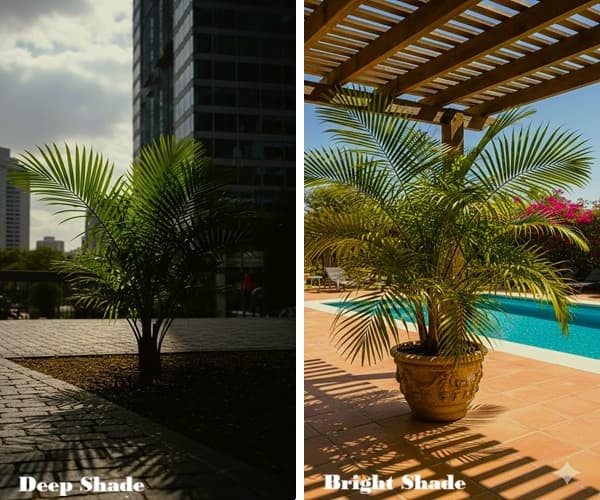
DEEP SHADE
Truly noticeable shade like on the north side of tall buildings, deep beneath a patio cover, or under a very dense tree canopy.
- These palms naturally grow in thick forests, with little direct sunlight.
- Palms such as Rhapis excelsa and Chamaedorea elegans.
- These palms tolerate light levels as low as 25-50 foot candles. Like the lighting in a cozy restaurant or dimly lit hallways. Bright enough to see clearly, moving around safely, but noticeably softer than typical office or retail lighting.
BRIGHT SHADE
Light that gives that comfortable, productive general indirect lighting.
- Light giving 100-200 foot candles. Like in well-lit offices or bright classrooms, or a sunny day under a pergola.
- For outdoors, light scattering fairly well through tree canopies.
- Palms like the Phoenix roebelenii are reliable with this lighting.
PARTIAL SHADE TO FULL SUN

Shade that scatters light under a thin-crowned tree, or early morning sun. Enough light for precise tasks, bright and energizing.
- Tolerated by many solitary (one trunk) palms.
- They need at least 300 foot candles.
- Like in brightly lit stores.
- Enough light for detailed crafts or medical examinations.
- Most palms are suited for this lighting. Like Livistona rotundifolia.
This range goes from partial shade, with 3-6 hours of sun. Then all the way up to full sun, with sunshine most of the day.
Why Most Palms Struggle in Low Light
Many palms that grow in shade still need some indirect light or dappled sun.
Very low light slows growth dramatically. Because sunlight is the beginning of their photosynthesis food production. Without enough food, any living thing won't grow as well as they should. They'll begin to show multiple symptoms.
Benefits of Growing Shade-Tolerant Palms
Some Palms are Frequently Used Indoors because they tolerate low light better than typical outdoor palms.
Many plant-lovers want to invite palms that grow in shade into their home. As it adds a tropic-like decor, it raises spirits on gloomy days, and it tends to increase a feeling of well-being.
And remember, shade-tolerant options are just one group within the many Different Kinds of Palm Trees, each for different light conditions and environments.
CHECK THIS FOR PALMS THAT GROW IN SHADE
Outdoor Palms That Grow in Shade
Most outdoor varieties do better in partial to deep shade. These palms need protection from harsh sun. Which also makes them suitable for growing under the canopy of taller trees.
Best Palms for Partial Shade
These palms prefer some light but tolerate shaded conditions better than full-sun species:
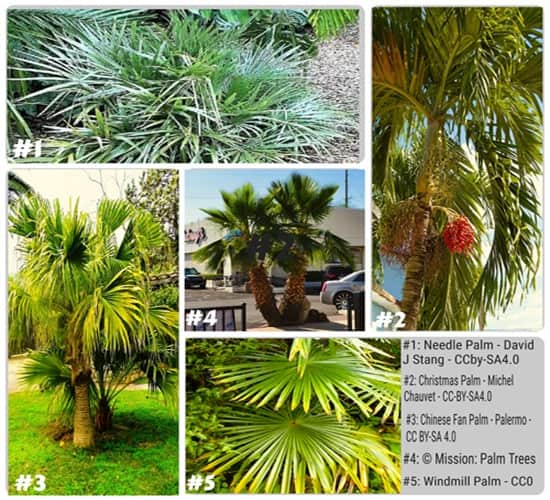
Phoenix roebelenii (Pygmy Date Palm)
- Does well in full sun to partial shade.
- Climate zones: 9b-11 with decent yearly rain. Dry 8b areas will work fine.
- Fairly high water needs, so some pot it for indoors.
- Shorter type of palm, it can reach 15ft/14.5m.
Livistona chinensis (Chinese Fan Palm)
- Can grow in partial shade outdoors and is a common landscape choice where full sun isn’t available.
- Best for zones 9-11, but has done ok in 8b with care.
- Requires medium watering schedule, with some organics in the soil.
Adonidia merrillii (Christmas Palm)
- Prefers full sun but is tolerant of partial shade, especially in hot climates.
- For zones 10b-11, but some grow in 10a.
- Give it regular water with humus filled soil for best growth.
Rhapidophyllum hystrix (Needle Palm)
- A small (12ft/4m max), clumping palm that tolerates shade as it natively grows under taller trees.
- May be the cold hardiest palm of all, good in zones 6b-11.
- It likes moist soil with regular water into humus-loaded soil.
Trachycarpus fortunei (Windmill Palm)
- Does partial shade well, well-known for adaptability to cooler climates. So it's zones 9b-11, but 9a can be carefully tried.
- Average water needs, not fussy for soil
Best Indoor Palms for Low-Light Rooms
Rhapis species are all shade-tolerant palms. They'll do excellently in filtered light. All have medium water needs.
- Rhapis humilis is the Slender Lady Palm. Ideal outdoor zone: 8b-11. Part shade, but a bit more light than the Lady.
- Rhapis multifida grows best outside, zones 9b-11. Requires shade at least half the day.
- Rhapis excelsa is the Lady Palm. Ideal USDA Climate zone outdoors is 9-11. Light shade works.
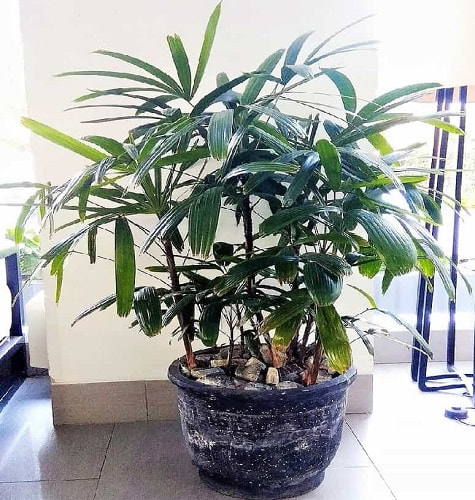 A Lovely Lady Palm in a Container
Palms That Transition Well
Between Indoor & Outdoor Shade
Chamaedorea - A Shade Suitable Species
Chamaedorea species shade-loving.
They're small to medium clumping palms adapted to grow under taller trees. So they do well with limited direct sun.
- C.elegans, the Parlor palm is ideal for 10b-11. High water needs. Its adaptability to low sunlight make it a Popular Indoor Potted Palm.
- C.seifrizii, the Bamboo Palm, is ideal for 10-11, but is known to survive frost events. Medium water needs.
- C.ernesti-augusti, called the Understory Fishtail Palm. Ideal in 10b-11. High water needs.
- C.metallica, the Metallic Palm. Best for 10b-11. Even full shade with reflected light is fine. High water needs.
- C.cateractum, the Cat Palm is ideal for 10-11, and is also known to survive frost events. High water needs.
- C.microspadix, the Hardy Bamboo Palm. Medium water needs.
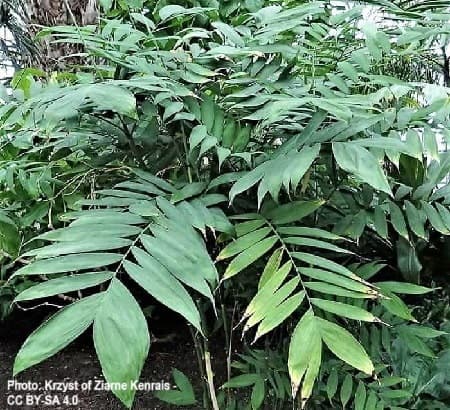 Hardy Bamboo Palm suited outside for 9-11.
 But it's known to have survived frost events.
Howea forsteriana - Kentia Palm
The Kentia has some flexibility.
- If you plant in tropical hotter climates, it needs part shade.
- But in cooler areas it can even tolerate sun all day.
Best in zones 10-11. But has done well in 9b if there's no regular inundating rainy season. It has medium water needs, adding a bit of humus to the soil improves its health.
It's a popular indoor plant, as it grows pretty slowly. Outdoors reaches up to 70ft/21m.
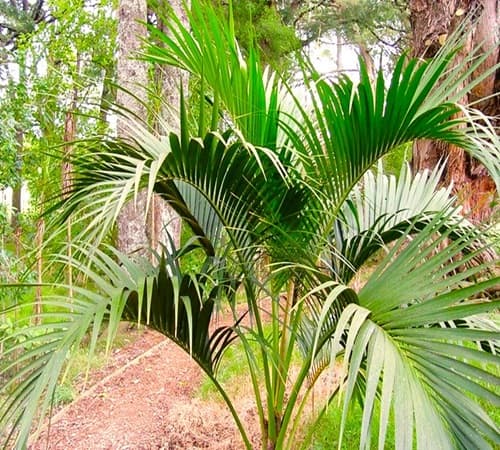 Kentia Palm with its lilting fronds.
Licuala grandis - Ruffled Fan Palm
A special beauty among palms that grow in shade. It's short, maxing out at 20ft/6m.
If you're in zones 10b-11, or even 10a's warmest Microclimates (click for definition), it does fine.
But it has some particular requirements:
- Lots of water into its humus-heavy extra acidic soil.
- Surroundings with good humidity.
A capable indoor palm, where it grows slowly.
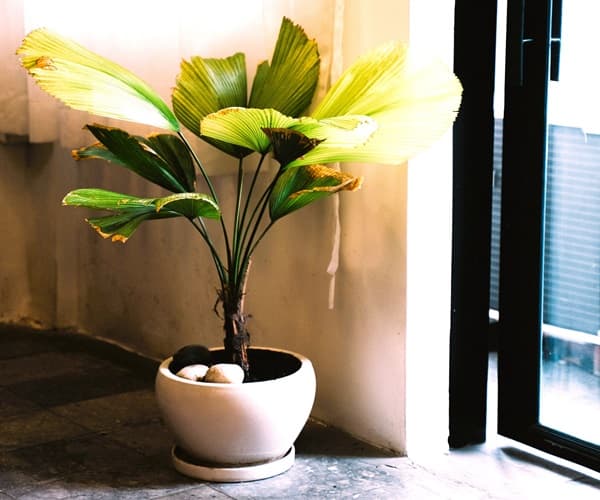 It's full round palmate (fan) fronds are very attractive.
Caryota mitis - Fishtail Palm
This thickly clumping palm can be used to provide shade! Especially when it gets its full height at 30ft/9m tall.
- Not good indoors for its quick growth, and massiveness. Outdoors stick with 10b-11, or warm 10a microclimates.
- It can do part shade, but also does well with full sun.
- High water needs in organic humus filled soil.
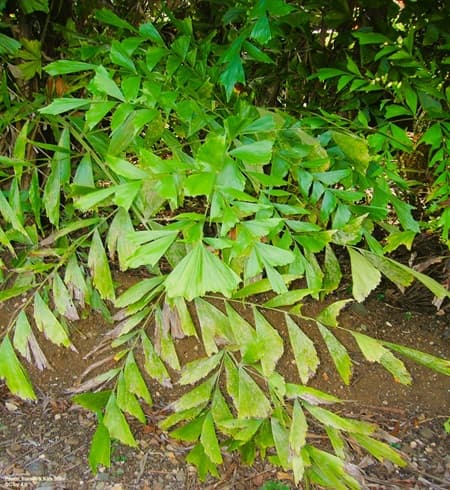 Lovely leaflets resemble fish tails.
Indoor Shade Palms vs. Outdoor Shade Palms
When it comes to palms that grow in shade, there's a distinction between species that work well indoors versus those suited for outdoor shady gardens.
INDOOR SHADE PALMS
They're typically Native Palms in the tropics. Those that grow beneath forest canopies. So they've adapted to do well in low-light conditions of our homes.
One popular choice is the Parlor Palm, which tolerates remarkably dim conditions.
These Types of Palms can also handle dry air and root restrictions that come with container life. Growing indoors slowly is an advantage so palm plants won't outgrow your living room!
OUTDOOR SHADE PALMS
While they prefer shade or part-shade,
- They have access to natural humidity, rainfall, and temperature variations.
- They normally grow more briskly than their potted counterparts.
- With proper Palm Tree Care, they'll usually reach their full genetic height and spread potential.
For instance, the Bamboo Palm (Chamaedorea seifrizii) is loved for its tropical lushness. Also...
- Understory planting: Palms native to forest understories (Chamaedorea, Rhapis, Rhapidophyllum) are typically most shade-tolerant.
- Partial shade: Many outdoor palms will manage shaded spots but still benefit from dappled or morning sun rather than complete darkness.
- Indoor vs outdoor: Some palms are best in bright, indirect light indoors rather than deep outdoor shade (e.g., Kentia).
- Frost events: Shade-tolerant palms often handle cold better because they avoid radiational frost. That is, palm leaves lose heat ionn clear nights so fast that they get colder than freezing (32oF/0oC), even though the air around them is still above freezing.
Key Differences for Shade Palms - Outdoors vs Indoors
The major distinction isn't always the species itself. As some palms, like lady palms, work both indoors and out. Instead, consider what "shade-tolerant palms" mean in each situation.
- Indoor palms must tolerate the low light levels of a room.
- Outdoor shade palms typically receive brighter indirect light, along with occasional sun.
- Indoor palms have lighter fertilizer proportion needs: 3-1-2. Outdoor palms like this: 8-2-12.
- Not flexible for being moved.
- Outdoor shade palms brought inside can sulk without enough light.
- Indoor palms moved outside could get sunburned even in partial shade.
- They must be slowly and properly acclimated.
How to Care for Shade-Growing Palms
Avoiding problems means Correctly Managing Your Palms that grow in shade.
Watering Requirements in Shade
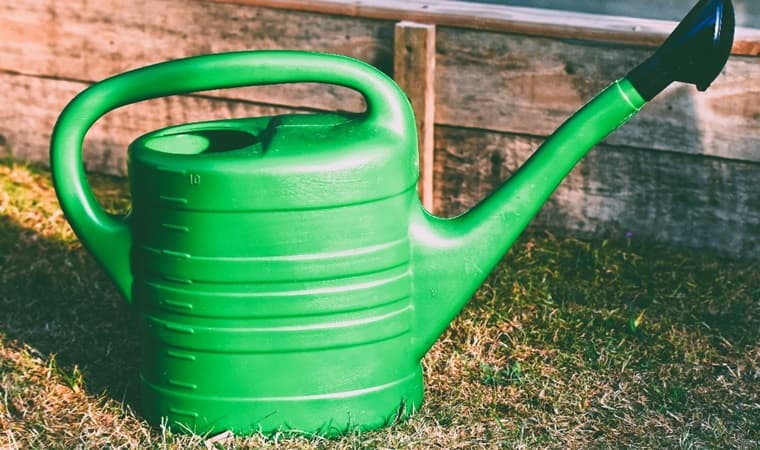
Shade-grown palms need less water because slower growth and lower light reduce moisture loss. Still the soil should never dry out completely.
Check the soil regularly. Especially for indoor plants which Can Easily be Overwatered. Outdoor shade palms often do well on natural rainfall in humid climates.
Soil and Drainage Considerations
Shade-tolerant palms require especially well-draining soil. Low light slows evaporation and ups the risk of root rot. Most palms won't tolerate consistently waterlogged roots.
Indoors, use a potting mix with 2 parts Coconut Coir dust, 2 parts perlite, and 1 part coarse sand. Add some organic matter for an outdoor shade palm, to balance drainage and moisture. One thing to avoid is bark chips.
Fertilizing Your Shade Palms
Shade palms need every advantage you can give for good health. Three important macronutrients your Palm Fertilizer should contain are:
- Nitrogen [N] for healthy frond growth and rich green color. nitrogen is directly responsible for maintaining healthy green chlorophyll production, active canopy development, and normal trunk structure. When N is adequate, palms grow vigorously and maintain full, richly colored canopies.
- Phosphorus [P] drives nearly all plant cell energy. It's essential, but no much is needed for palms.
- Potassium [K], the internal traffic controller. Managing frond breathing, enables leaf food production delivery to other Parts of the Palm, keeps cells firm maintaining strength and switches on growth processes. Deficiency is the most common nutritional disorder throughout the palm-growing world.
Magnesium [Mg], another macronutrient, should be 4% of the ingredients. Essential for food production using photosynthesis.
Preventing Common Problems in Low Light
Low-light conditions naturally provide several challenges, like these:
- Slow, weak growth with elongated, pale fronds is probably the most common issue. The palm stretches toward available light . Consider moving it gradually closer to a better light source.
- Root rot risk, because these palms use water more slowly. Continually moist soil plus dim light may attract fungal diseases.
- Older fronds can yellow and drop off more frequently. So the palm can bring the most energy to new growth.
- Overall, weakness for pest attack, as stressed plants attract harmful bugs.
It's frustrating because recovery is often painfully slow. If a palm isn't getting enough light, it can't produce healing energy quickly.
But if you'd consider planning your landscape more broadly, it helps to explore the Different Types of Outdoor Palm Trees to see how shade-tolerant varieties fit into the bigger picture.
Common Mistakes When Growing Palms in Shade
The most common errors when caring for palms that grow in shade are:
- Overwatering shade-loving palms. The water stays around longer, which can cause fungal problems.
- Moving a palm quickly from one shade level to another. Instead adjust shade/light gradually.
- Choosing a sun-loving palm for a shady spot will lead to problems. Best to know the palms light requirements by checking a Good Palm Tree Reference Book before Purchasing a Palm.
REFERENCES:
Broschat, T.K., Meerow, A.W. & Elliott, M.K. (2017) Ornamental Palm Horticulture. Gainesville FL, University Press of Florida.
Mitchell, R. (2025, March 20) Shady palm, lady palm. UF/IFAS Extension Charlotte County. blogs.ifas.ufl.edu/charlotteco/2025/03/20/shady-palm-lady-palm/
UF/IFAS EDIS Publications EP261, EP262, EP268, EP516, and UF/IFAS News (2015) by Broschat, T.K
Broschat, T.K. “Cold Damage on Palms” (UF/IFAS EDIS MG318) The mechanism of radiational frost in palms.
Brown, S.P. “Cold Protection of Landscape Plants” (UF/IFAS EDIS ENH1/MG025) for the role of shade/canopy in frost protection.
Frequently Asked Questions
About Shade-Growing Palms
Mission: Palm Trees is made possible by readers like you! If you purchase via a link/ ad here, we may earn a small commission. At no added cost to you. Thanks for your support! Learn more>
Can palm trees survive in full shade?
Can palm trees survive in full shade?
Very few palms can survive full shade, but several species tolerate and grow well in partial to deep shade. Most palms that grow in shade actually prefer bright, indirect light or dappled shade rather than complete darkness.
What is the most shade-tolerant palm tree?
What is the most shade-tolerant palm tree?
The Lady Palm (Rhapis excelsa) is often considered the most shade-tolerant palm, capable of surviving in very low light conditions both indoors and outdoors. The Parlor Palm (Chamaedorea elegans) is a close second, particularly for indoors.
In Deep Shade:
Focus on Rhapis excelsa, Chamaedoreas, Sabal minor, and Hawea forsteriana.
Remember that palms in deep shade glow even more slowly. And expect palms to survive rather than demonstrate a picture of health.
Do shade palms grow slower than palms in sun?
Do shade palms grow slower than palms in sun?
Yes, palms growing in shade grow more slowly than the same species would in brighter conditions.
This slower growth is natural, preventing weak, spindly growth when palms stretch for light. If you've ever seen a bent palm, unnaturally living in shady circumstances? You'll know it's needing more sunlight.
It's why shade palms are ideal for the home, as slow growth indoors is a good thing. See Why That's a Good Thing.
Can I move a sun-loving palm into shade?
Can I move a sun-loving palm into shade?
Moving a palm from full sun directly into shade can shock it.
If you want to bring a palm to a shadier spot, do so gradually over several weeks, increasing shade exposure bit by bit.
This lets the plant acclimate. Just like when people move to a different climate from what they're used to. People slowly get used to a big change in their environment.
How much water do shade palms need compared to palms in sun?
How much water do shade palms need compared to palms in sun?
Shade palms generally require less frequent watering than palms in full sun because water evaporates more slowly in shaded areas. Overwatering Palms is actually one of the most common problems with shade palms.
So before you water a shade palm, always check soil moisture first. Two techniques to tell when watering is needed:
- Stick a wooden chopstick (like you get in Asian Restaurants) fully down into the soil, while leaving a hand-hold area above the ground. If it's fully dry, you can water.
- You can use a moisture meter. Like This One that we've found is pretty sturdy and reliable.
Check Our Watering Section on this page.
Will my shade palm produce flowers and fruit?
Will my shade palm produce flowers and fruit?
Many shade-tolerant palms still flower and then produce fruit with lower light conditions. But how often they do that will likely decrease compared to palm trees getting brighter sunlight.
Some species may not flower at all in deep shade. Which means, of course, The Palm Fruit will not be able to form.
Can I grow shade palms under trees?
Can I grow shade palms under trees?
Yes, many shade-tolerant palms make excellent understory plants beneath larger trees. Just ensure they're not competing heavily for water and nutrients, and that the overhead canopy isn't so dense that no light penetrates.
Why are my shade palm's leaves turning yellow?
Why are my shade palm's leaves turning yellow?
Yellow leaves on shade palms can indicate several issues including overwatering (most common in shade), Nutrient Deficiencies, or ironically, too much shade.
Check your Watering Schedule and consider whether the Palm Needs More Light.
Takeaways for Palms that Grow in Shade
Certain palm species are able to grow in shady spots. Whether outdoors of indoors.
We tried here to help you evaluate in you'd desire to have any palms that grow in shade for you own home's circumstances. We've given you methods to assess that decision, and hope helped you.

About the Authors: Karen McGowan is the creator of MissionPalmTrees.com, and The Palm Species Navigator, along with her husband Bill. Where they share easy to read palm tree expertise gained from years of finding and studying palms in varied climates. So readers will know palms, and can avoid costly palm planting mistakes. Learn more.
We Love Arizona Where Palm Trees Grow & We Love Helping Others Appreciate Them Too!
Member of Local First Arizona - Supporting Local Businesses Wherever They Are!
Privacy Policy> | Terms/Conditions/CC Licenses> | Advertising Disclosure> | Contact Us>
Copyright © 2022 - MissionPalmTrees.com All Rights Reserved

Do Not Copy - No use is permitted without permission. Scraping the contents of MissionPalmTrees.com website for the purpose of AI (artificial intelligence) LLM (large language model) training is strictly forbidden. Mission: Palm Trees Name & Logo Registered in the U.S. State of Arizona
As an Amazon Affiliate we earn from qualifying purchases.
A Production of Picture Rocks Networking LLC
This site is protected under U.S. and International copyright laws.