- Home
- All Kinds of Palms
- Types of Outdoor Palms
- Sun Lovin' Palms
Palm Trees for Full Sun
Palm trees for full sun are waiting for you!
Do you have a place on your property that's very sunny? Then one of these could be the palm for you to delight in its sunlit warmth.
Many palm trees for full sun can withstand some drought. Most of our recommendations are also capable of enduring some very frigid temperatures. So, you can be relieved if an unexpected cold spell comes your way.
Feeling overwhelmed by palm tree problems or confusing information?
You’re not alone! At Mission: Palm Trees, we help everyday palm lovers grow, care for, identify & enjoy palms without baffling jargon or exhausting research.
We do the Authentic Research by cross-checking botanical data, while making palm tree info interesting & more fun to know.
Best Palm Trees for Full Sun
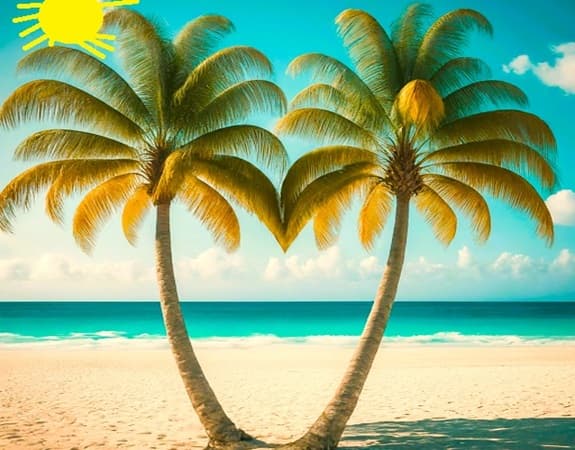
Want to get a palm that gives you its all pretty quickly? Give one of these an ideal sunny spot, and you'll enjoy seeing that sunlight through the fronds!
Fast Growing Palm Trees for Full Sun
Were you thinking of one of these Different Kinds of Palms to include in your garden? They will work because of their love of warm, sunny places! Then match up the need for lots of water or the quickness of their growth for your own desires.
Australian Cabbage Palm
Livistona australis is nice looking & grows fairly quickly. It does well with full sun. Plus, it can take temporary lows of 20oF/-6.6oC. Zone 9-11.
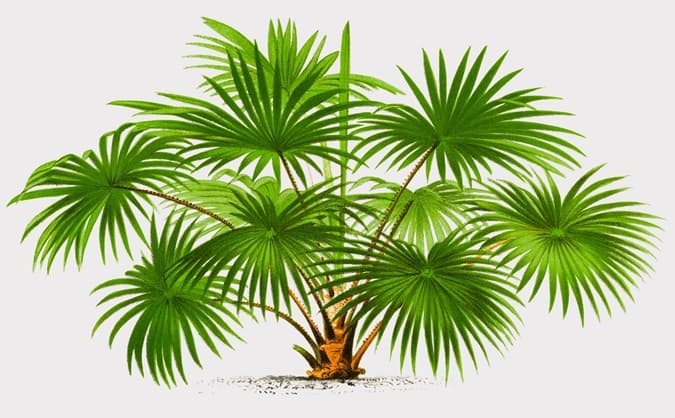 Australian Cabbage Palm is a Stunning Palmate, Getting to 60ft/18m.
Ribbon Fan Palm
Livistona decipiens has stunning inflorescences emerging floppily upward from the crown. Showing nice yellow flowers.
Give it all it needs for quick sunny growth to 70'/21m. And you can grow it easily from seed! Zones 9-11, but 8b can be doable.
Queen Palm
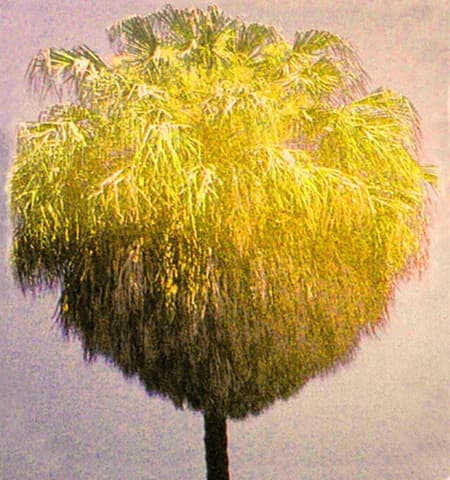
Syagrus romanzoffiana gets sky-high (45-90 ft./13-27m) rather quickly. Not recommended for planting in Southern Florida, except when diligently attending to But Rot prevention. Otherwise Quite Hardy.
Besides sun, loves warmth & water. Best for Zones 9b-11. Warmest sunniest parts of 8b-9a can be tried.
Very ripe fruits are edible. Some say they're delightedly sweet with plum & banana hints. But normally they're used for animal feed, rather than a savory treat for humans.
Medium Tall Sun-Loving Palms
Bismark Palm
Bismarckia nobilis has bluish tinged fronds that love full sun.
Be cautious if temps go into the 20F/-6.6C+. Cold Damage can happen if they're chilled too long.
Zone best: 9-11. Tops off at 60ft/18m.
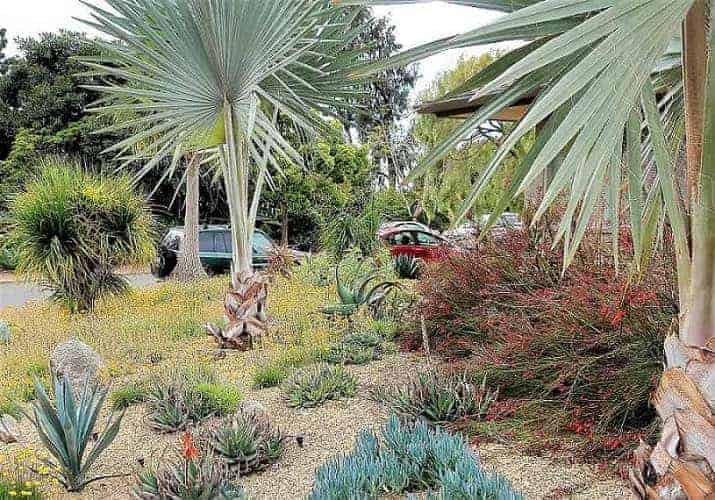 Dazzling Bismarck Palms seen when touring with the Mission Hills Garden Walk.
Photo: KM @Flickr - CC BY 4.0
Desert Fan Palm
Washingtonia filifera loves inland hot sun. Can even go as low as 15F/-9.4C. Native to northern Mexico, Western Arizona & low deserts in So-Cal. Zone 8-11 in areas with humidity, 7 in dry climates.
Not so tall as its cousin, the W. robusta.
We're well familiar with this commonly named California Fan Palm. In Tucson Arizona, where we live, they're delightfully placed on many property fronts.
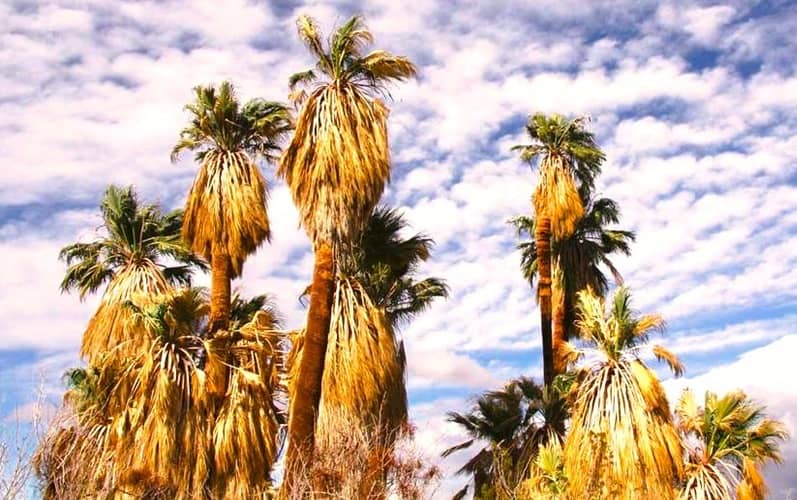 Grove of filifera palms, called the Cotton Palm in the UK. Lots of petticoats!
Guadalupe Palm
Brahea edulis has a fat trunk that takes it right through those springtime desert winds.
Full sun is okay. With caution tolerates temps as low as 18oF/-7.8C in dryer places. But ideal for Zones 9-11.
 Can be easily grown from seed. Getting up to 35 ft./10.5m tall. Photo: Herve Rey - CC-BY-SA
Silver Saw Palmetto
Acoelorrhaphe wrightii is only advised if good watering available. Long been growing in Florida's Everglades.
It's one of those palm trees for full sun that's not drought-friendly. But known to tolerate temps to lows of 20oF/-6.7C, if temporary. Grows to 40'/12m, while clustering. Best Zones: 9b-11.
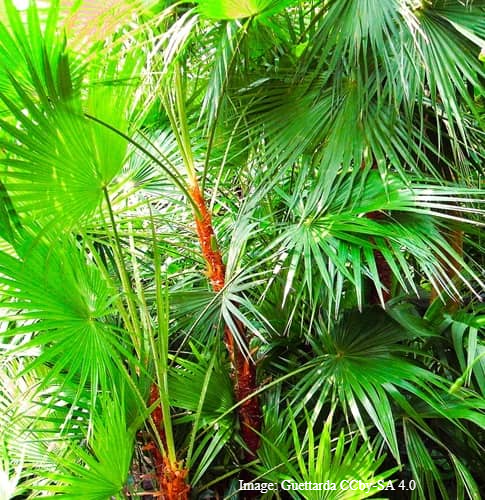
Sinaloa Hesper Palm
With Brahea aculeata, full sun is a must.
It can temporarily do temps down to about 20oF/-6.6oC. Slow-growing for Zones 9-11. Dry parts of 8b possible with care.
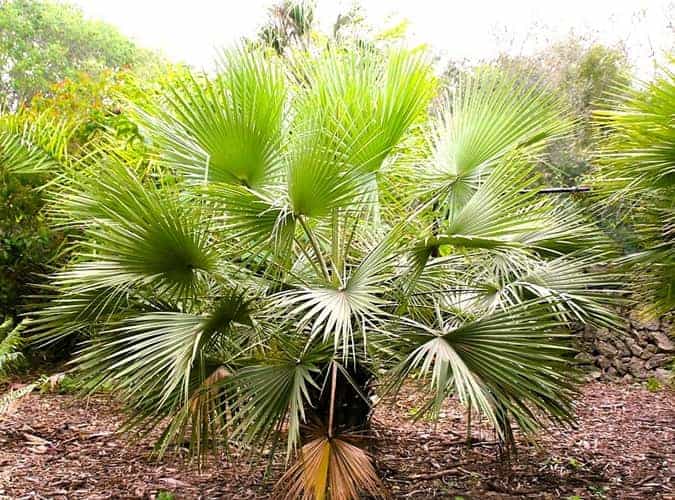 Sinaloa Hesper growing nicely at Fairchild Tropical Botanic Garden in Miami
Photo: David J Stang - CC BY-SA 4.0
Tall Palms in the Sun
Canary Island Date Palm
Yes, Phoenix canariensis is native to the Canary Islands.
Majestic, slow-growing, specimen. Among The Tallest Palms. Their full round crowns enjoy catching our desert sun.
Even while loving some sunny warmth, they can limitedly go to 15oF/-9.4oC. Zone 9-11, even 8b in dry climes.
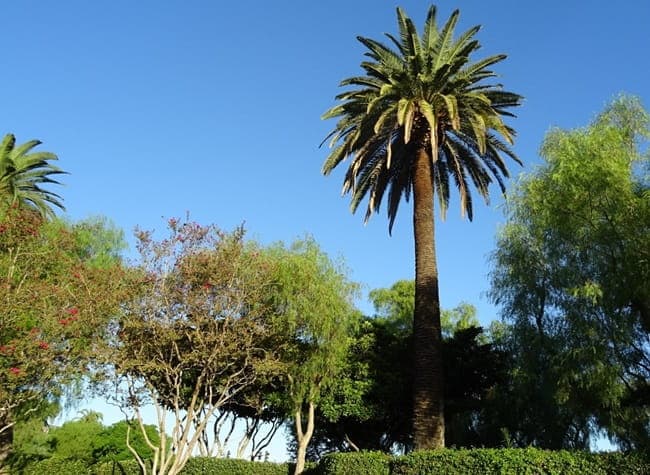 We see plenty in our Sonoran Desert town. Beauties with a full round crown.
Cohune Palm
Attalea cohune is impressively large & attractive.
Can get 100ft/30m tall. Its pinnate fronds, themselves, are 30'/9m long! With leaflets about 3'/90cm. Takes young Cohunes lots of time to form a solitary trunk. Then growth speeds up
Best for Zones 10-11. Can try 9b, with care.
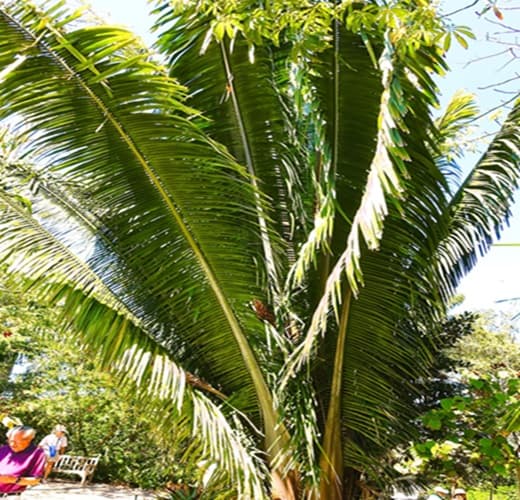 Seeing Its Youth, With Lengthy Palm Fronds
Short Palms for Full Sun
European Fan Palm
Chamaerops humilis spreads out bush-like.
It sits well in full sun. And quite cold-tolerant, briefly down to 10oF/-12.2C! Brrrr!! Zones 8-11.
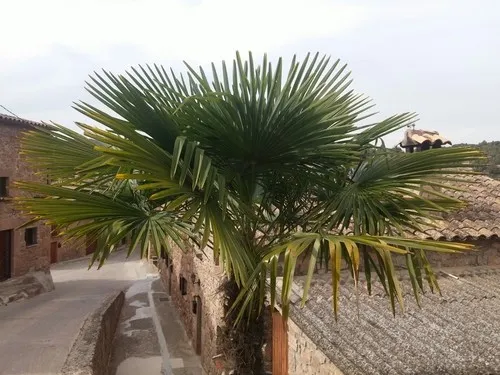 Also Known as: Mediterranean Fan Palm
Mazari Palm
Nannorrhops ritcheana is small, and pretty.
A clumper with either bluish or green fronds. Loves hot deserts. Plus fleetingly tolerates a lowest temperature of 15oF. Zones 8-11, plus 7 for arid deserts.
 Showing Off its Lovely Palmate Leaves at Marie Selby Botanical Gardens, Sarasota, Florida
Pygmy Date Palm
Phoenix roebelenii is small-sized. Wants sun & heat. Not much for cold, but short periods at 20oF/-6.7C could be okay. No lower.
 AKA Miniature Date Palm - Loving this arrangement! They Max Out at 15ft/14.5m.
Photo: Forest & Kim Starr - Attribution 4.0 International.
Sand Palm
Allagoptera arenaria is native to sunny seaside Brazilian regions.
But if you're inland, it'll be fine. Temps must go no lower than 28oF/-2.2C, for minimal time-frame. Zone 8b-11. Smaller size, to about 8-ft/2.4m, slowly. Fruits are edible.
Avoid planting near tall trees or buildings, if they cast shade. They don't want that!
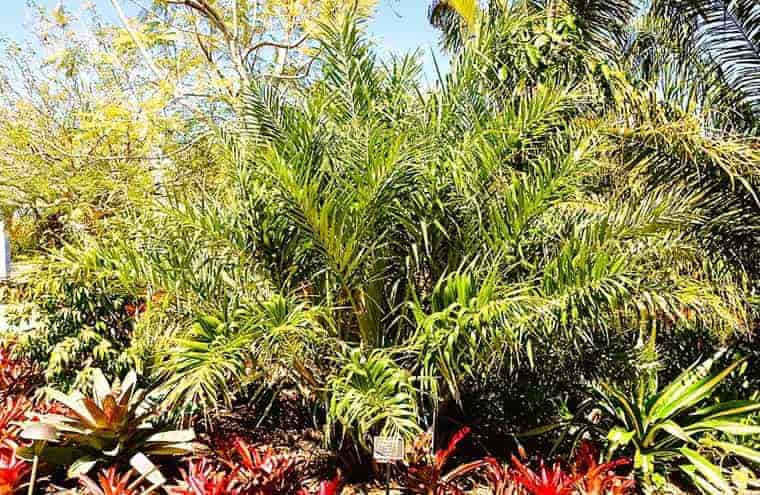 Can do some shade time. Though small, can't tolerate indoor light.
Not easily found to purchase! But possible.
It will grow from seed! If you have patience for up to a 2-year wait!
Sunny Palms with Edible Fruit
Date Palm
Phoenix dactylifera may be the most historically cultivated for fruit production. It's a true desert sun & heat lover. Still, can tolerate low temps of 18oF, for a bit. Gets pretty tall, to 90'/27m.
 Going to Sample Date Fruit With a Picnic Under the Date Palms
In Arizona's Sonoran Desert
Jelly Palm
Butia capitata, nicknamed for the Palm Fruit people turn into jellies.
It loves the desert climate. So it manages drought well. Fairly cold-tolerant, too. Handling temporary temps down to about 16oF. Zone 9-11, can do 8 for Mediterranean climates.
A shorty (35'/10.5m) that's great to consider for your Landscape Planning.
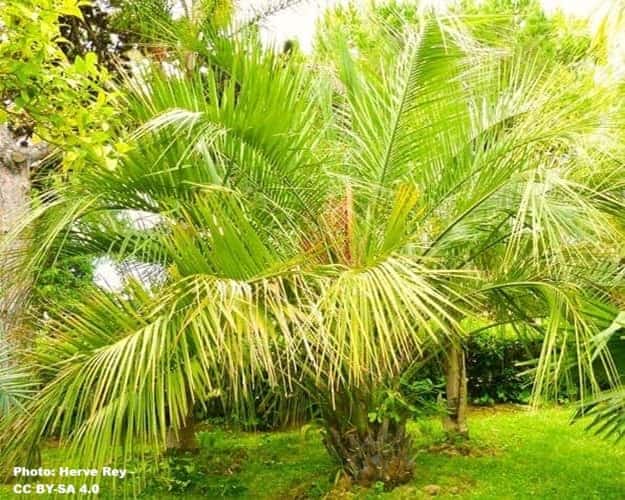 This very hardy pinnate is also called Pindo Palm.
Photo: Herve Rey - CC-BY-SA
Stunning Sunny Palm Lookers
But remember, sun-loving varieties are just one part of the broader Types of Outdoor Palm Trees, which include choices for different environments and conditions.
Mexican Blue Palm
Brahea armata is maybe the ideal inland desert palm.
Loves (Zone 8b-11) dry full sun & heat. But can also take momentary Fahrenheit plunge to about 16oF/8.8C.
Exquisite palmate leaves look like sunbursts. Stalks with creamy flowers arch upward past the fronds & then droop.
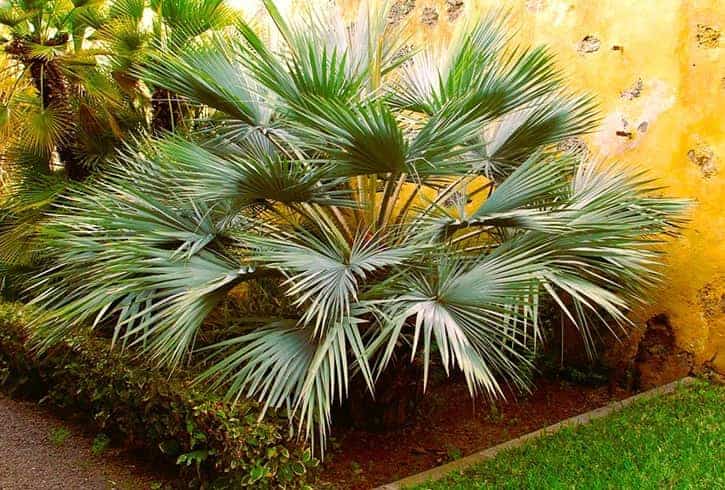 Only gets to 30'/9m tall. Also called Blue Hesper Palm. This one slowly grows in Tenerife.
Photo: Berthold Werner via CCby-SA3.0
Triangle Palm
Dypsis decaryi is uniquely shaped. You can't miss it!
Native to Madagascar, so it loves heat. Sun is good, too, but some recommend a bit of shade. Can go occasionally to about 26oF/-3.3C without injury. Zone 10 & 11, can try 9b with aridity.
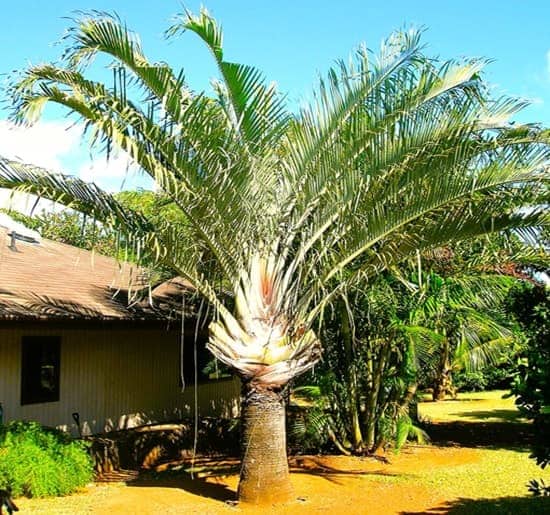 Also nicknamed Neodypsis decaryi. Gets to 40'/12m upward. Growing on a Maui property of Lilikoi Gulch Haiku
Photo: Forest & Kim Starr - CC BY 4.0
Woolly Butia Palm
Butia eriospatha is related to the Jelly.
But not as cold tolerant. Needs protection as temps go to low of 20oF/-6.6C.
Named for its woolly looking tomentum-covered (hairy matte) spathe, the woody boat-shaped Palm Part sheltering new inflorescences (flower stems).
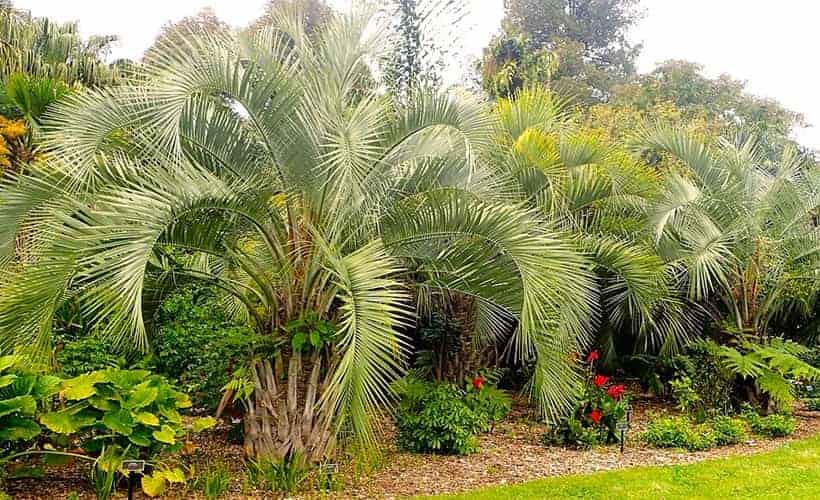 No trouble with hot, full desert sun!
Photo: Krzysztof Ziarnek - CC BY-SA 4.0
Latest Palm Articles/Updates


-
Where Are Palm Trees Native? Surprising to You?!
 Where are palm trees native? Were you wondering. Meaning where are they indigenous, endemic, or naturally originally from. You'll discover it!
 -
Are Palm Trees Bad for the Environment?
 Get a clear look at whether palm trees are bad for the environment, including shade, water use, wildlife value, and where the concerns are overstated.
Palm Trees for Full Sun Takeaways
Many palms, if they don't love full sun, they can take it for part of the day. These palms here are true sun lovers. Many of them Are Native To deserts. Some are tropical sun-lovers.
The most important thing for growing palm trees for full sun is to be sure it's the right palm for the right place. These could be your perfect palm, awaiting the sunniest part of your yard!
If you want to explore more options, see our Full Guide to Different Kinds of Palm Trees covering a wide range of varieties.
These Might Interest You
Landscaping Around a Palm Tree that Looks Polished
Landscaping around a palm tree is easier with layered plants, edging, color, and climate-smart ideas that make one standout palm feel finished.
Where Do Palm Trees Grow? Maybe More Places Than You Thought!
Wondering where do palm trees grow? For sure it's the tropics & subtropics. They're more versatile than that, though. Even doable for temperate regions.
Landscaping With Palm Trees - Ideas & Top Tips!
Transform your yard when you discover our easy landscaping with palm trees ideas, perfect for any skill level. See simple designs that make a big impact.



About the Authors: Karen McGowan is the creator of MissionPalmTrees.com, and The Palm Species Navigator, along with her husband Bill. Where they share easy to read palm tree expertise gained from years of finding and studying palms in varied climates. So readers will know palms, and can avoid costly palm planting mistakes. Learn more.
We Love Arizona Where Palm Trees Grow & We Love Helping Others Appreciate Them Too!
Member of Local First Arizona - Supporting Local Businesses Wherever They Are!
Privacy Policy> | Terms/Conditions/CC Licenses> | Advertising Disclosure> | Contact Us>
Copyright © 2022 - MissionPalmTrees.com All Rights Reserved

Do Not Copy - No use is permitted without permission. Scraping the contents of MissionPalmTrees.com website for the purpose of AI (artificial intelligence) LLM (large language model) training is strictly forbidden. Mission: Palm Trees Name & Logo Registered in the U.S. State of Arizona
As an Amazon Affiliate we earn from qualifying purchases.
A Production of Picture Rocks Networking LLC
This site is protected under U.S. and International copyright laws.