- Home
- Palm Physique
- What Are Fronds?
What Is a Palm Frond? Parts, Growth, and Uses
Palm frond - the leaf of a palm tree, which contain the "food" energy for the entire palm.
- Fronds grow from the crown (top) of the palm, from the single growing point (the heart).
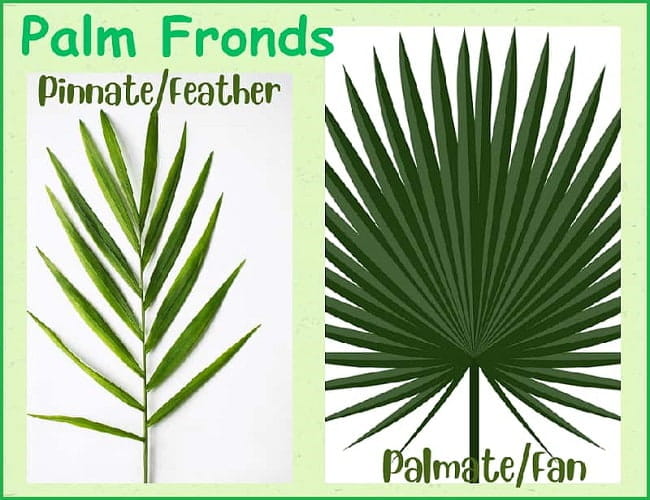
- Common frond types: fan-shaped (palmate) and feather-shaped (pinnate).
- New fronds normally appear as a “spear” before opening. Called that as the frond is unopened, with a pointy top.
Fronds have an important job.
We'll help you understand the value of palm fronds. We'll get deeper into how their work is so important to people and animals, their varieties of appearance, and even a bit of fun - plus more!
Feeling overwhelmed by palm tree problems or confusing information?
You’re not alone! At Mission: Palm Trees, we do the Authentic Research for you, by cross-checking botanical data, and then making palm tree info interesting, easy to read & more fun to know.
What is a Palm Frond and How Do They Grow?
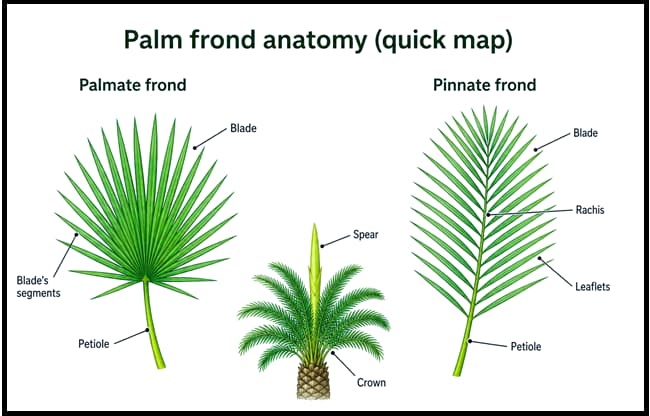
>> Crown: the top of the palm where fronds have emerged forming a gathering of fronds
>> Frond: the whole leaf structure
>> Petiole: the frond's main stem growing from the trunk
>> Rachis: the central “stem” of a pinnate frond where leaflets are attached.
>> Leaflets: the many small leves attached to the rachis (pinnate)
>> Spear leaf: a new frond before it opens.
In the scientific, botanical community "fronds" is the term often used instead of leaves. But more than plain old leaves, fronds are unique and individual to the species they grow from.
- Fronds always grow out from the top of a palm tree, from just inside the highest part of the trunk.
- New frond cells actively grow there, originating from the palm's growing point. Also called the apical meristem, or commonly the heart.
- Fronds are often large, and come in different shapes.
- They can have a fan-like appearance, called palmate.
- Some can look feathery, called pinnate.
- A few others have their own look.
Exceedlingly important, the job for palm leaves is to create food and energy for the palm's growth. But there are also other forceful things in a palm frond's job description.
- Fronds help manage a palm's inner temperature. Making adjustments that maintain life & protect the palm tree's growing point.
- Palm leaves help strengthen the palm's structure. So important when they're blown around by strong winds during a storm.
- If you see colorful falling leaves in the autumn, it reminds you that colder weather is coming. But unlike those deciduous trees, palm fronds stay green year-round.
What is a Palm Spear?
When you look at the top of a palm tree, you may see a spiky looking green thing growing straight up.
If you wondered if it might be a palm frond coming out of the top - you'd be right!
New palm fronds grow up & out from the center of the palm crown - the top of the palm trunk. That way new fronds push older fronds downward. So the oldest fronds are the bottom ones in the crown.
The new single spiky leaf gets taller. Looking like a tightly coiled green leaf spiral, because the frond hasn't yet opened. It has a spear-like appearance - in fact new palm fronds are called spears!
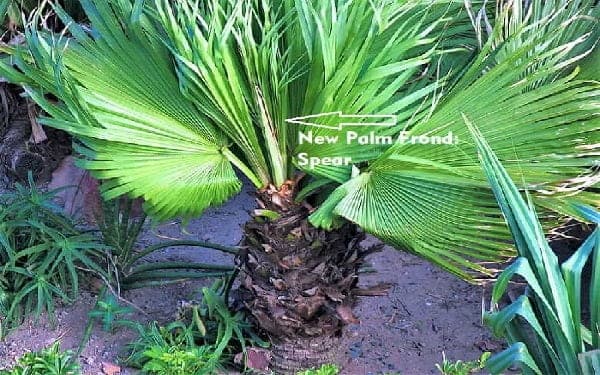 New palm fronds grow out from the trunk's top - the spear.
As it rises, it begins opening and spreading outward. Finally taking different shapes, depending on the Species of Palm Trees.
The Different Shapes of Palm Fronds
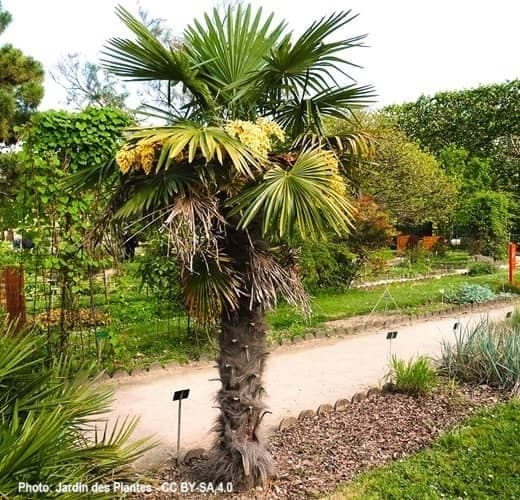
Fan Shaped Fronds
Botanically Called Palmate Leaves
Like those palm fronds on the Windmill Palm below. And also the Mexican Fan Palm, which is well known as the Tall Tree of Los Angeles & those Throughout Southern California.
Feather Shaped Fronds
Botanically Called Pinnate Leaves
With leaflets growing on a each stem (rachis). Like on (pictured left to right/top to bottom below) Royal Palms, Palma de Sierra palms and Date Palms.
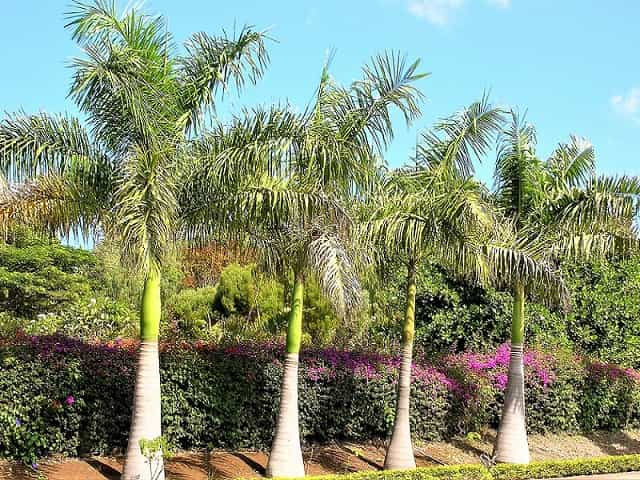 Stand of Royal Palms
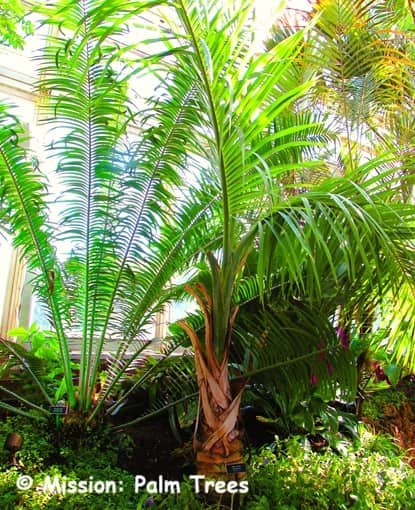 Gaussia princeps from Cuba.
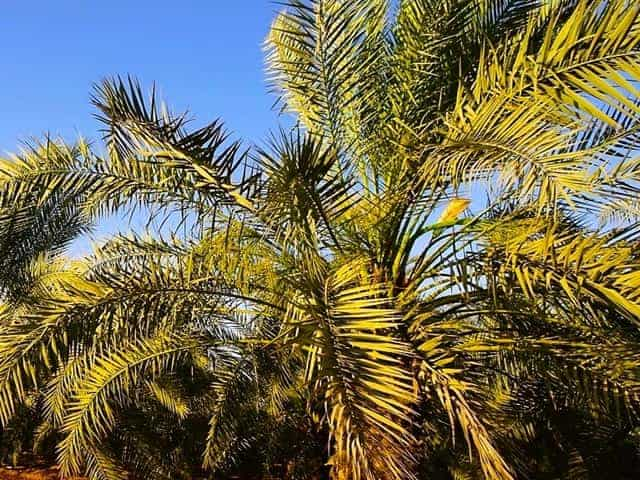 Crown of the Date Palm
Uniquely Shaped Fronds
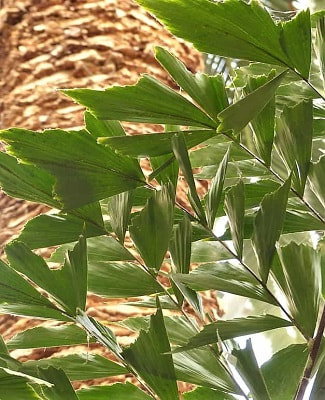 Fronds of a Fishtail Palm are bipinnate, with leaflets growing on a second rachis.
Botanically Called Binpinnate Leaves
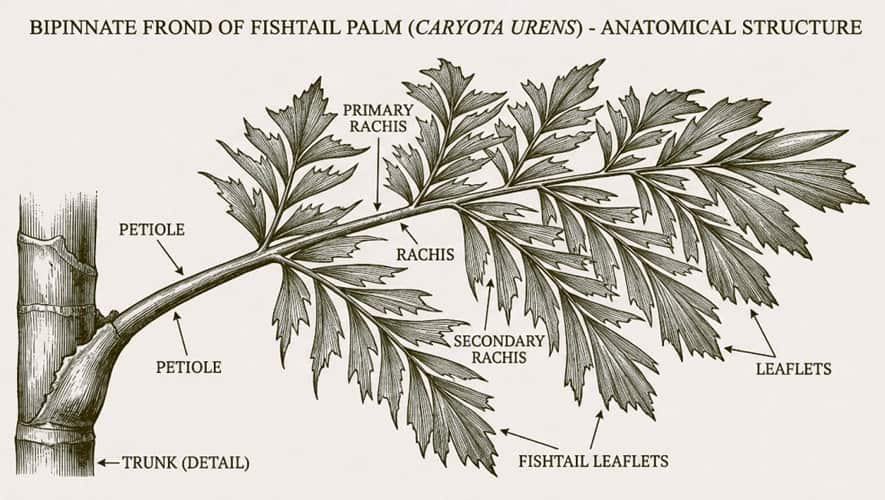
Like the massive Giant Fishtail Palm (Caryota gigas), a bipinnate. The Caryota genus is the only one with bipinnate fronds discovered so far.
Each frond has a primary stem, and growing from that are secondary stems on which leaflets grow.
There are two other forms to mention, to be complete.
Entire Leaved Fronds - Their stem begins with a petiole, then the blade attaches to either side of the rachis, usually notched at the top.
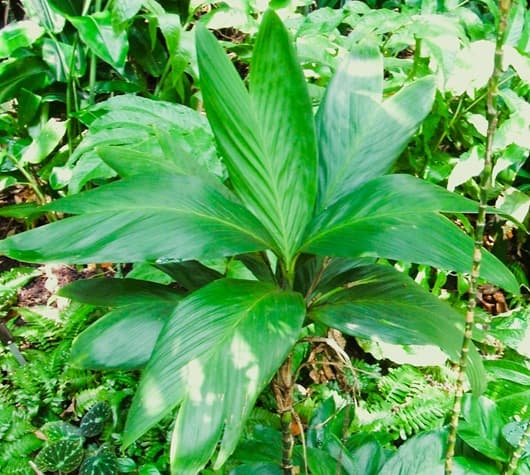 Each leaf on this Necklace Palm (Chamaedorea_geonomiformi) is an entire frond.
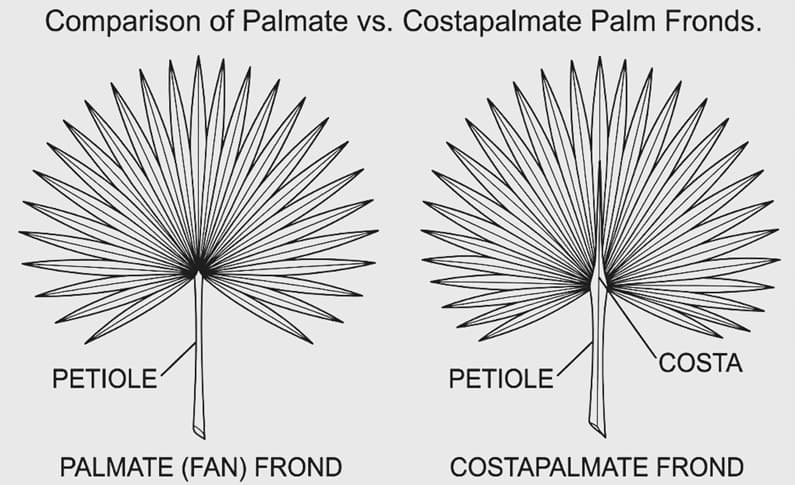
Costapalmate Fronds - Per its name you may have guessed this is a version of palmate fronds.
- Normally the petiole of a fan palms stops at the blade's beginning.
- But with costapalmates, the petiole continues into the blade.
- The stem part within the palmate blade is called the costa.
Why Palm Fronds can Handle Strong Winds
You've probably seen videos of palms bending over in a hurricane. Yet the fronds are still attached. Palm fronds have more strength than you would think.
Because many palm fronds are built to bend!
- Many have a flexible structure that lets wind pass through or around rather than snapping like rigid branches.
- Frond parts can fold up a bit so they're not flat into the wind.
- Palms that have had The Proper Pruning Method of the fronds will be better protected in extreme wind.
- The fronds of most can be compare to reinforced concrete. Ornamental Palm Horticulture states regarding the stems (petiole and rachis) "the vascular and fiber bundles are the steel rods, and the ground tissue... is like the concrete matrix within which the rods are embedded."
- And engineering students are discovering How to Use Palm Fronds in Construction, because of their strength.
However some species have softer fronds, like Carpenteria acuminata (Carpentaria or Carpy Palm). They're liable to shred with strong winds.
AFTER WIND CHECKLIST:
- Remove only fully dead/broken fronds.
- Leave alone those with fully green blades, even if they're a bit shreddy.
- If a newly growing spear is damaged, try gently but firmly pulling it out. If it easily comes out from the trunk's top, that's serious. The growing point has suffered, and is likely dead.
What is a Palm Frond's Part in Food Production?
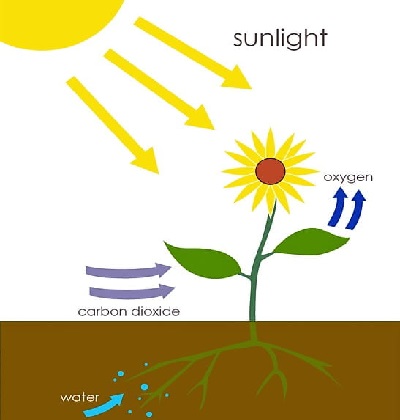
Palm Fronds are The Part of The Palm plant that makes its own food. By using photosynthesis, the whole palm is able to get its nutritional needs.
The Photosynthesis Food Factory
All palm tree species use organic materials that surround them. Not a bad thing!!
- They use chlorophyll, the frond's natural chemical which colors them green & helps absorb sun energy.
- Roots send dissolved minerals up through the palm trunk and through to the fronds. These essential minerals are needed for energy.
- Palms absorb Carbon Dioxide (CO2) From The Air. And put oxygen back into the air - very valuable for our lives. We need to inhale and absorb that 21% of oxygen in the air.
This combination cooperates in helping palm tree fronds make food for the palm's growth & health.
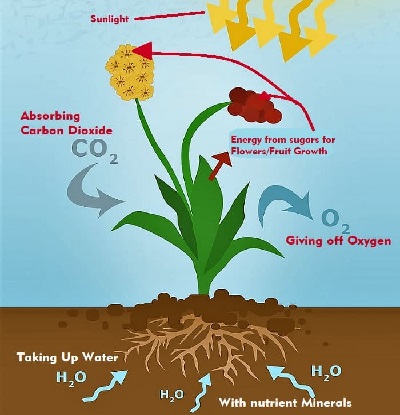 Do You See the Benefits of Photosynthesis?
Think of All the Palm Fronds Working This System!
Photosynthesis is a continuous, ongoing process.
Recent MPT Article


-
How to Draw Palm Leaves - A Step-by-Step Guide for Beginners
 Learn how to draw palm leaves to bring them to life on paper. Our step-by-step guide makes drawing palm leaves easy, even for beginners. Try it!

Palm Frond Natural Products & Their Uses
For years & years palm tree species have been valuable.
One of many cultures' most useful plants. Especially in tropical climates. But also wherever Palm Trees Grow Naturally.
Palm fronds are used for roof thatching in suitable climates. They're are also useful for making practical home items, like baskets, floor mats & sun hats.
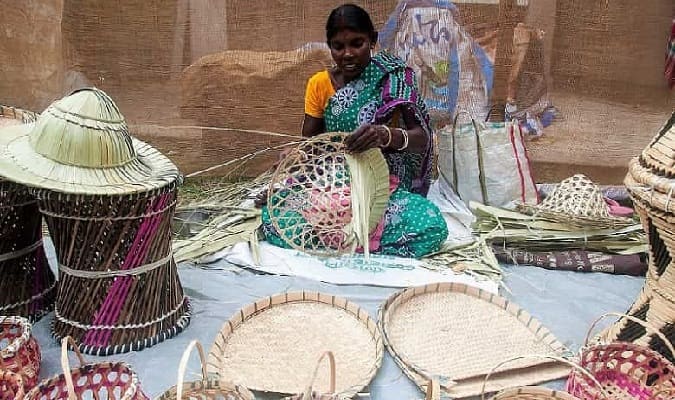 Crafting items to sell, all made from palm fronds.
Palm tree fronds are used in religious festivals, because of Fronds' Traditional Meaning. They're used for skirting, or made into fans for traditional dances.
EXAMPLE OF HOW TO MAKE FANS FROM PALMS
Using palm frond parts for cooking or for food prep is common in various regions of the world. Have you ever been to a Hawaiian Luau where they wrap kalua pork in palm leaves?
Palm fronds are used in making costumes for cultural shows. Often seen in tropical tourist areas.
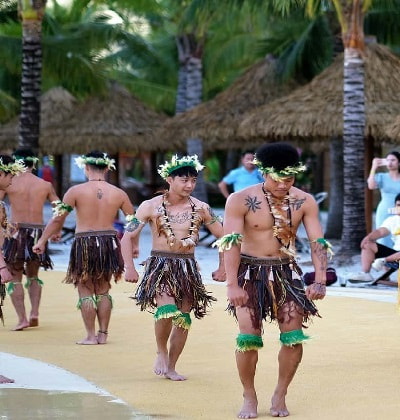 A Tropically Influenced Cultural Production
Possibilities for Palm Fronds in Construction
They're finding ways to use fronds for strengthening concrete. Useful for ecologically sound construction that's better for the environment.
Engineering students discovered palm leaves have exceptional tensile strength. Meaning that fronds are quite bendable before breaking.
They wondered about using parts of fronds for rebar replacement in concrete builds. Their testing has shown frond strength is near that Of Tensile Steel.
Research is continuing.
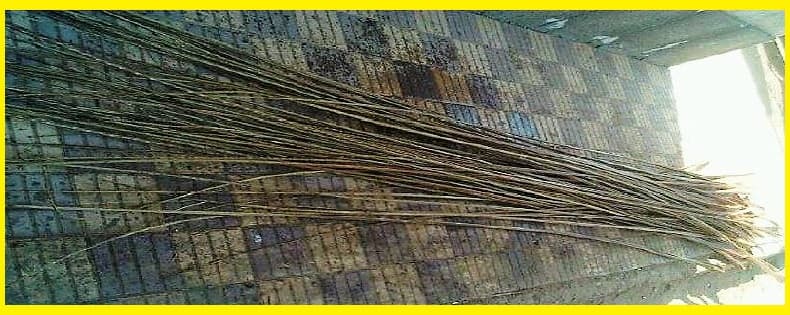 Palm frond petioles (stems) await further processing for use in place of steel rebar.
Palm Fronds are Valued for the Fashion Industry
Palm fronds are being incorporated in fashionable items. Demonstrating that designers are getting more creative all the time. Fronds are being made into unique eco-friendly hats & more.
Rafia palm fronds are a common source. Their frond fibers can be made into many types of usable items. Plus it's biodegradable or recyclable.
Mission: Palm Trees is made possible by readers like you! Some links on this page are affiliate links. If you purchase through them, we may earn a small commission at no extra cost to you. Thanks for your support! Learn more>
And of course, palm fronds have many ways for you to Use Palms in Home Decor.
Giving that balmy Palm Feeling to any area of your house, porch or deck. Some use them when throwing parties, like a Hawaiian Luau theme, or a kids' Swim Party. Adults may like palm fronds for their Bar Decor.
What is a Palm Frond - The Takeaways
As you've asked "what is a palm frond?" - Have we covered what you wanted to know?
We hope you now have more understanding about palm fronds, their value, and their multiple uses. Palms showing off their fronds are common sights in tropical & subtropical regions. Now you've seen the history, showing they're not only a pretty warm weather plant. They've also been used for centuries, for many handy purposes.
When they're used in a reasonable, environmentally friendly manner palm fronds are a continuing resource for practical purposes, as well as providing delight. Palm trees and their fronds are a useful, natural source that help cultures around the world.
See More Palm Information
Parts of a Palm Tree: Trunk, Fronds, Roots & Fruit
Get a clear guide to palm tree parts, including fronds, petioles, roots, flowers, and fruit, plus what makes palms different from other trees.
Where Do Palm Trees Grow in the US?
Check whether palm trees in the US grow in your state. Get a state-by-state look at climate fit, hardiness zones, and where palms succeed the best.
Palm Trees For Full Sun - Are They For You? Here's the Best!
Palm trees for full sun are looking for their best sunny location! Take a look of these to see if you can plant in the right sunny spot.



About the Authors: Karen McGowan is the creator of MissionPalmTrees.com, and The Palm Species Navigator, along with her husband Bill. Where they share easy to read palm tree expertise gained from years of finding and studying palms in varied climates. So readers will know palms, and can avoid costly palm planting mistakes. Learn more.
Don't Miss It: The Right Palm, The Right Place
Our free quick-reference guide is yours! So you can stop guessing which species will survive your local climate.
Along with that, the Palm Species Navigator for tips on species hardiness, seasonal care, and more. Click to enter your email & get your guide.
We Love Arizona Where Palm Trees Grow & We Love Helping Others Appreciate Them Too!
Member of Local First Arizona - Supporting Local Businesses Wherever They Are!
Privacy Policy> | Terms/Conditions/CC Licenses> | Advertising Disclosure> | Contact Us>
Copyright © 2022 - MissionPalmTrees.com All Rights Reserved

Do Not Copy - No use is permitted without permission. Scraping the contents of MissionPalmTrees.com website for the purpose of AI (artificial intelligence) LLM (large language model) training is strictly forbidden. Mission: Palm Trees Name & Logo Registered in the U.S. State of Arizona
As an Amazon Affiliate we earn from qualifying purchases.
A Production of Picture Rocks Networking LLC
This site is protected under U.S. and International copyright laws.